Showing posts with label Insects. Show all posts

Sunday, April 23, 2017

Everything That's Old is New, Part 1

Well, it looks like we've got quite the backlog of photos that haven't made it onto the blog yet. In the interest of playing catch-up I thought it'd be good to unload some of our favorite un-shared photos from 2016 over three or four posts. Not every outing becomes a grand adventure, and so we end up collecting a photo here, a photo there. You know how it goes. Also, this week marks three years in Oregon! So by happy coincidence we get to use this opportunity to take you on a mini-tour of our favorite spots around the Pacific Northwest. The photos in this post were all taken around Salem.


What's the only thing better than a Bushtit? Two Bushtits! Or better still, cuddling Bushtits.


We're fortunate that we live pretty near to a couple of excellent National Wildlife Refuges, including our go-to wetland, Ankeny NWR. There have been some extraordinary rarities in the few years we've lived here, including a Tufted Duck this winter, and a Ruff the year before.

American White Pelicans are annual at Ankeny, but never seem to stick around for long

Lincoln's Sparrow


Aside from the birds, Ankeny is still one of my favorite places for the sheer number and variety of arthropods it hosts. It's always worth stooping to closely inspect the grasses or the rails along the boardwalk trails. And it's taught me that it's always worth have a macro lens on hand, even if it's just my handy iPhone clip that I carry everywhere.

Forest Tent Caterpillar
Bush-katydid nymph, cutest of all insects.

Jumping spider


Tundra Swans are a highlight every winter when they gather at Ankeny by the dozens, sometimes numbering nearly 100. I know it's cliché to associate swans with grace, so I won't. I'll just show this series Maureen shot and defy you come up with a better, more apt word.


Ankeny isn't the only place in town to find swans, since Minto-Brown Island Park is home to a pair of their Mute cousins. Yeah, they're invasive and pose a huge menace to wetland ecosystems by aggressively driving out the competition, unsustainably devouring native vegetation, and choking waterways with their waste... but there's no arguing with those good looks.


One of the coolest finds at Minto-Brown last year was this mating pair of dagger flies. The male brings her a nuptial gift in an attempt to win her over. If he's successful she goes to work on the gift while the male starts going to work on her. 


The same pair dagger flies, as seen from above

There are so many active raptor nests in spring that even the non-birders realize how great the park is for birds, regularly stopping us to tell us where they saw this or that. Just in the past few weeks we've seen nests for Osprey, Red-tailed Hawks, and Northern Harriers. This harrier from last year was in the process of getting nest material together.
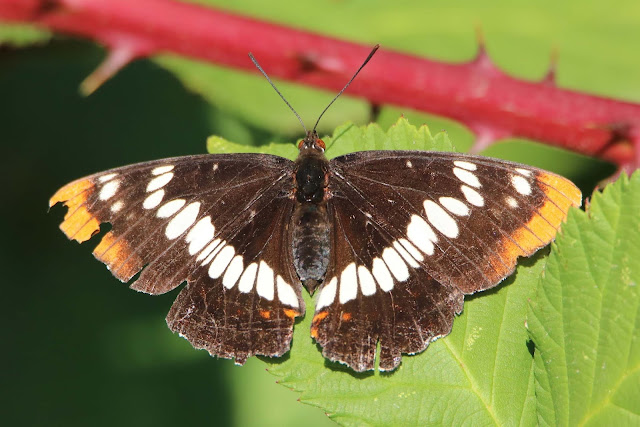

Lorquin's Admiral

Townsend's Chipmunk is the default chipmunk here in the Willamette Valley. I still haven't figured out how to tell it apart from Oregon's four other chipmunk species other than by range, but since I think Townsend's is all we get in the valley...

Sunday, March 20, 2016

I'm a Sucker for Sapsuckers

Maureen is away in Texas this weekend, which is unfortunate for me in every way but one: she left behind her big lens. Happy to take advantage of a rare opportunity I knew I wanted to spend a good deal of time outdoors, and shockingly, the weather actually cooperated with after 3 straight weeks(!) of rain. So directly after work on Friday I set out, first to Woodmansee Park (interrupting countless rounds of frisbee golf every step of the way), and then to Minto-Brown.

Bushtit

Song Sparrow

American Robin. Cold-blooded killa

Friday's highlight wasn't a bird, but actually a copulating pair of… I'll say robber flies? As they whizzed by me I couldn't quite tell what was happening, so I followed until they landed and I could sidle up and play voyeur. As the male gripped the branch above above him, he inseminated the female below while she was busy feasting on her nuptial gift. 


I returned to Minto-Brown again in the morning, when I wasn't racing the sun. But I did soon decide to see how many species I could rack up before I needed food or water (neither of which I'd thought to bring). There's a certain trail that I recently visited, sans camera, when I happened upon a very cooperative Red-breasted Sapsucker (x Red-naped Sapsucker hybrid? See comment below). I'd cursed myself for not being better prepared, and crossed my fingers that I might luck into another close encounter. 


I was NOT disappointed. It turned out that this particular stand of trees is frequented by two sapsuckers, and their handiwork was visible all around. I could have watched them all day. 


Even though we've lived hear for (just about) two years, and Minto-Brown is one of the premier parks in the Salem area, there are miles of trails we've never explored. You think you're going to take one path to the end, and then it splits. You choose a path and it splits again. Now I'd decided to finally do some serious exploring, and the park rejected me. Time and again I'd have to backtrack after finding trails flooded out. 

Golden-crowned Kinglet

Hopefully not the last Varied Thrush of the season

Brush Rabbit

Song Sparrow

I did still manage to see more of the park than ever before, and wherever I explored there was one constant: singing Bewick's Wrens. They were everywhere. And very much out in the open. The three photos below are of three different individual birds - just a small sample of the day's tally.

Bewick's Wren


Sunday, September 13, 2015

Honduras Birding, Day 3 Continued

There was so much to share from our trip to Rio Santiago in my last post (especially with all of those amazing hummers), that I didn’t have room to squeeze in some other highlights of the day. When we pulled up to the resort, right away we noticed a “moth sheet” set up with a mercury vapor lamp much like the one back at our lodge.

Conchylodes nolckenialis

Nope, not a bumble bee. Megalopyge opercularis.

Sosxetra grata

As we were more focused on our birding at the time, we only got to OOOooo and Aaaahhhh just for a short while before we hit the trail. But as you can see, this sheet was quite awe worthy.

Schausiella santarosensis

Copaxa rufinans

Eacles masoni

Gonodonta species

Some of these moths were bigger and even more spectacular than the ones we had seen back at our lodge. There were more cool and different types of Sphynx Moths. And who couldn’t be impressed by the large and lovely Rothschild Moth, otherwise known as “cuatro ventanas” or four windows for its beautiful clear “pane” on each wing.
Clockwise from top left: Xylophanes ceratomioides; Xylophanes undata; Eumorpha species?; Xylophanes chiron

Xylophanes undata and Madoryx pluto

Left to right: Unknown; Callionima species; Eacles imperialis (Imperial Moth); Other unknown moth below imperial moth

Rothschildia lebeau (Rothschild Moth or "Cuatro Ventanas")

Another impressive creature has an impressive name to match – the Hercules Beetle. That spunky owner of the resort introduced him as his little friend. One of the resort guests chuckled as he told us the story of how he woke up his teenage daughter with this big guy. Hahaha. That beetle was glorious, indeed.

Hercules Beetle

Katydid species

Dobson Fly

After we left the Rio Santiago Nature Resort, we got back to our lodge exhausted but oh so thrilled about our encounter with the gorgeous Spectacled Owls and all of the fun grass birds, hummers and kingfishers. But our birding for the day didn’t quite end there. As we got back to our lodge to have lunch, a small swarm of hummingbirds swooshed by in quite a fuss. Our guide German yelled out, “Did you see that? Ferruginous Pygmy Owl!” And sure enough, in a nearby tree sat this little owl with a bit of lunch of his own. It was a lizard, but the hummers were still not happy about him being around.

Ferruginous Pymy Owl with a lizard

Ferruginous Pymy Owl

Ferruginous Pymy Owl

After refueling and a little cat nap, we roamed the grounds of our lodge and took in the beautiful landscape among the rain clouds. We had some lovely views of our friends the Chestnut-colored Woodpeckers as well as Blue-crowned Motmot. 


Blue-crowned Motmot

Chestnut-colored Woodpecker


And I can't forget to mention picking up this list of birds and more: Red-billed Pigeon, White-collared Swift, White-crowned Parrot, Ivory-billed Woodcreeper, Dusky-capped Flycatcher, Rose-throated Becard (which apparently don't have a rose throat in Honduras). And because having two awesome raptors wasn’t quite enough in one day with the Spectacled Owl at the Rio Santiago Nature Resort and then the Ferruginous Pygmy Owl right when we got back to our lodge, we also picked up a juvenile Gray Hawk! This was quite a day, and the trip was just still less than halfway through. My goodness.

Juvenile Gray Hawk