Showing posts with label American White Pelican. Show all posts

Sunday, April 23, 2017

Everything That's Old is New, Part 1

Well, it looks like we've got quite the backlog of photos that haven't made it onto the blog yet. In the interest of playing catch-up I thought it'd be good to unload some of our favorite un-shared photos from 2016 over three or four posts. Not every outing becomes a grand adventure, and so we end up collecting a photo here, a photo there. You know how it goes. Also, this week marks three years in Oregon! So by happy coincidence we get to use this opportunity to take you on a mini-tour of our favorite spots around the Pacific Northwest. The photos in this post were all taken around Salem.


What's the only thing better than a Bushtit? Two Bushtits! Or better still, cuddling Bushtits.


We're fortunate that we live pretty near to a couple of excellent National Wildlife Refuges, including our go-to wetland, Ankeny NWR. There have been some extraordinary rarities in the few years we've lived here, including a Tufted Duck this winter, and a Ruff the year before.

American White Pelicans are annual at Ankeny, but never seem to stick around for long

Lincoln's Sparrow


Aside from the birds, Ankeny is still one of my favorite places for the sheer number and variety of arthropods it hosts. It's always worth stooping to closely inspect the grasses or the rails along the boardwalk trails. And it's taught me that it's always worth have a macro lens on hand, even if it's just my handy iPhone clip that I carry everywhere.

Forest Tent Caterpillar
Bush-katydid nymph, cutest of all insects.

Jumping spider


Tundra Swans are a highlight every winter when they gather at Ankeny by the dozens, sometimes numbering nearly 100. I know it's cliché to associate swans with grace, so I won't. I'll just show this series Maureen shot and defy you come up with a better, more apt word.


Ankeny isn't the only place in town to find swans, since Minto-Brown Island Park is home to a pair of their Mute cousins. Yeah, they're invasive and pose a huge menace to wetland ecosystems by aggressively driving out the competition, unsustainably devouring native vegetation, and choking waterways with their waste... but there's no arguing with those good looks.


One of the coolest finds at Minto-Brown last year was this mating pair of dagger flies. The male brings her a nuptial gift in an attempt to win her over. If he's successful she goes to work on the gift while the male starts going to work on her. 


The same pair dagger flies, as seen from above

There are so many active raptor nests in spring that even the non-birders realize how great the park is for birds, regularly stopping us to tell us where they saw this or that. Just in the past few weeks we've seen nests for Osprey, Red-tailed Hawks, and Northern Harriers. This harrier from last year was in the process of getting nest material together.
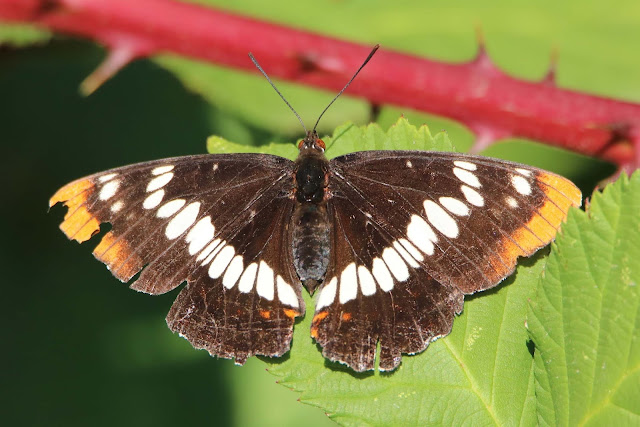

Lorquin's Admiral

Townsend's Chipmunk is the default chipmunk here in the Willamette Valley. I still haven't figured out how to tell it apart from Oregon's four other chipmunk species other than by range, but since I think Townsend's is all we get in the valley...

Sunday, January 18, 2015

Fall at Finley NWR

Ever since we announced our move to Oregon, it seemed like everyone we told who was even slightly familiar with the state told us, “Ohhh, it rains a lot!” We don’t mind the rain much, as we faced plenty of rain before in Florida, albeit a much different type of rain. We were told that it was the dreariness that might get us. However, I can’t say we faced much typical “Oregon weather” until just recently in December. The end of spring was an absolute delight, summer was warm but with no humidity (a foreign thing to me), and fall was nice and crisp, and even sometimes downright freezing. Winter has given us a bit of that typical rain and dreariness – including a full day of rain during the Salem Christmas Bird Count. Yikes. 

Northern Harrier over the Marsh


But who wants to think about that right now? I want to think about those lovely, sunny and crisp fall days, particularly at Finley National Wildlife Refuge. You may recall that Finley NWR was where we had our first encounters with my beloved Acorn Woodpecker. Knowing that there is a resident family there makes me very happy, and the sight of these fastidious woodpeckers always tickles me.


We were able to visit Finley before most of the trails closed for the winter for the birds’ protection. Geese and ducks were starting to gather in the lake, but not yet in big numbers during the peak of winter. Nonetheless, we were treated by a few American White Pelicans that swam by – bold splashes of white in a sea of greens, grays, and browns. 

American White Pelicans
The colors of fall Lungwort lichen
Can you spot the moth?
The feeders at the visitor center were especially busy. Groups of Golden-Crowned Sparrows and Juncos were scattered about. A nice Fox Sparrow made a very brief appearance. It’s always a treat to see these very sleek and handsome sparrows. Everyone was coming out to enjoy some solid sunshine, which would seen be a rarity for the upcoming winter season. 

Golden-Crowned Sparrow
Fox Sparrow
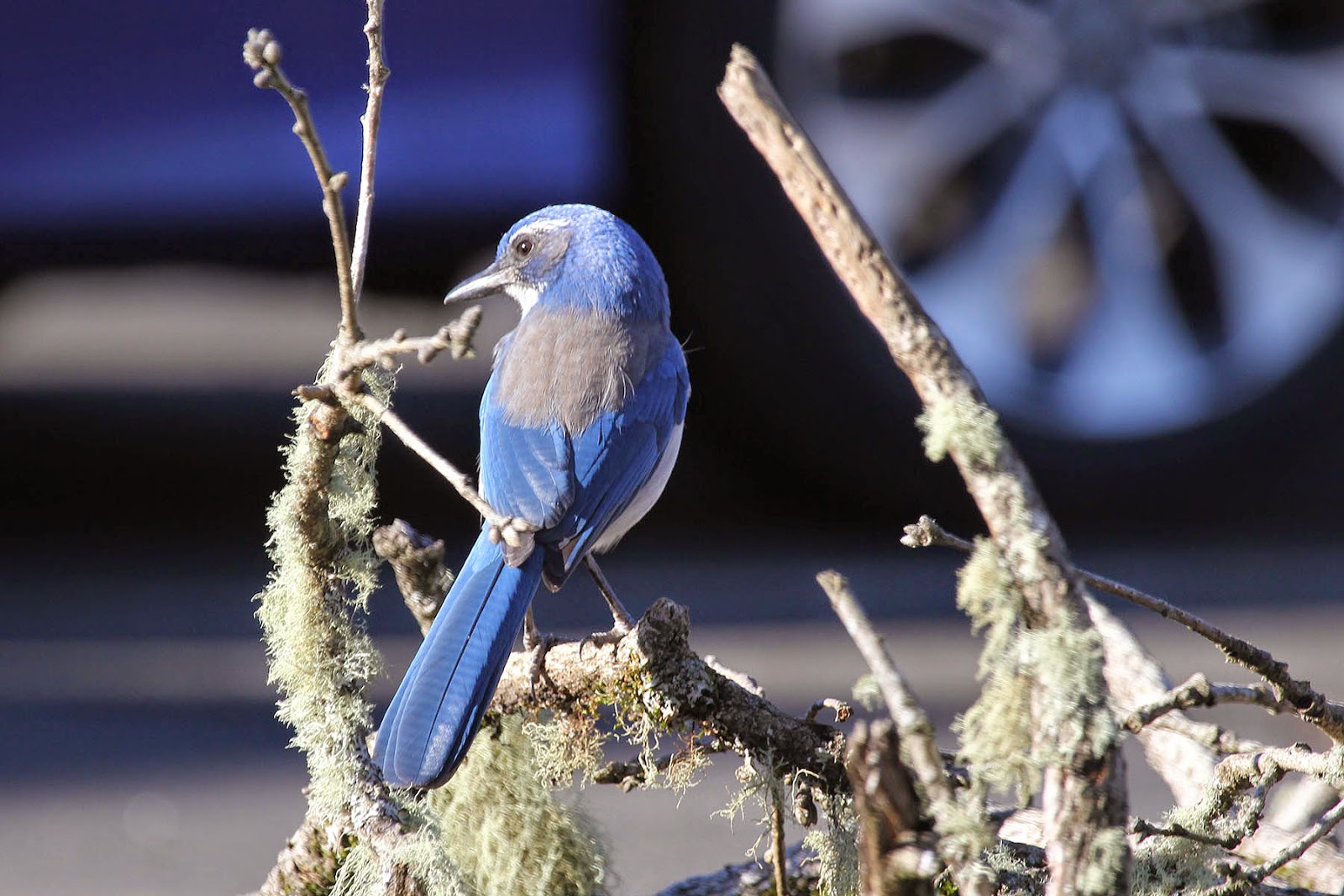
Western Scrub-Jay 

Although most of Cabell Marsh Trail was closed, the short path to the observation deck was open and full of fun birds. Waterfowl are great, but it was the little guys that were stealing the show that day. Golden-Crowned Kinglets were chirping all over the place and giving great close looks. A Brown Creeper stayed still long enough for me to capture a shot of him in a somewhat still position. A darling little Marsh Wren jumped up and out from the reeds to show off a bit. These are one of my favorite wrens – such tough guys in small bodies. If you ever use playback to call one out, he will fuss at you for quite a while, making you feel like you’re being berated.

Golden-Crowned Kinglet 

Brown Creeper
Marsh Wren

There were still fall apples on the trees, which made for a lovely setting for a Spotted Towhee. And I couldn’t have asked for a more cooperative and gorgeous Varied Thrush. These birds are unreal – such gorgeous hues of burnt orange and slatey grayish-blue. There was a pair of them munching on the apples (or maybe the bugs and grubs in the apples). 

Spotted Towhee
Varied Thrush

Even the undertail of the Varied Thrush is lovely.
We’re always thrilled to see these relatively new birds, but the surprise of the day was a ninja-like Wrentit. We spotted him and watched him for about 30 seconds before he flew off never to be seen again. We had only seen one once just barely in a little wooded area just off the coast, and we were surprised to see one this far inland, but I guess it’s not out of the question. In any case, it was fun to catch even a fleeting glance at this Kabuki mask-faced little bird. He was a lovely way to end our last fall trip to Finley. 

Skulky Wrentit


Wednesday, April 4, 2012

Reassurance of Humanity

Birding is a great hobby – it gets you outdoors, it’s relatively cheap, and it allows you to appreciate nature in such a great way. We birders love to watch and observe birds, and sometimes sightings can bring us the utmost joy. And then there are times when we can feel a little ache in our heart when we learn about species that are in trouble or on the decline, which oftentimes is due to habitat loss mostly caused by humans. We do our best to donate to conservation groups when we can or write letters to government officials pleading for reconsideration of some project that is sure to cause destruction of wildlife habitat. But sometimes we can still feel disconnected from the effort. That’s why it’s so great when one gets an opportunity to really get out there and physically do something that matters and be reassured by the conservation efforts of devoted individuals.

Royal Terns flying by stirring up an American Oystercatcher - Tomkins Island

View of a sandbar from Tomkins Island. I'm guessing mostly Royal Terns and Laughing Gulls made up those little white dots. 

I had such an opportunity just yesterday when a group from the local Fish and Wildlife Service and a handful of volunteers set out to help maintain a suitable habitat for nesting shorebirds. Back in 2005, a group from the Savannah District Corps of Engineers constructed Tomkins Island, a 5-acre island built in the Atlantic Ocean between Georgia and South Carolina specifically as a habitat for bird nesting. Every year it needs a little maintenance to make it attractive to birds such as Royal Terns, Sandwich Terns, Least Terns, and American Oystercatchers. Well, I learned that terns, especially Least Terns, can be quite particular about their nesting grounds as they prefer very clear sandy/ rocky flat areas with little to no vegetation. Problems arise when beachgoers and off-road vehicles also like these areas, and they can often disturb and damage nesting sites. Least terns have also been known to go to flat rooftops covered in pebbles for nesting.

American Oystercatcher keeping a close eye on us

American Oystercatcher taking post on a rock

The local expert advised that the area hasn’t quite attracted the Least Terns, which are especially in need of nesting grounds. He advised that the larger Sandwich and Royal Terns can sometimes bully them out of breeding territory. However, good people are doing good work and trying their best to make a nice area for them all. A crew had already started the maintenance work, but there was still much to be done. A group of about a dozen of us were the second round of folks to do some landscaping work – pulling and raking any vegetation in sight, spraying herbicide on plants we couldn’t pull, and treating for fire ants (a danger to chicks).

A group of Brown Pelicans taking off

Brown Pelican Soaring

It was definitely hard work as the island had no shade and no bathrooms, not to mention temps in the high 70s/low 80s with almost no clouds. Luckily, there was a nice ocean breeze and no biting bugs in action. It was tough and my body could feel it later that day, and even today as all my muscles ache. But what gratifying work it was! I got my hands dirty and actually physically did something that will directly benefit birds. 

A pair of American Oystercatchers with Brown Pelicans flying over

American White Pelicans amongst Brown Pelicans

It was such a rewarding experience, and I only wish Nick didn’t have that thing called "work" that kept him away. There were plenty of birds to draw my attention, but mostly I had to keep my head down and pull weeds. But I did stop every once in while to enjoy the sights and sounds of Brown Pelicans in breeding plumage, a nice little group of American White Pelicans (a first for the area for me), American Oystercatchers calling and flitting about, masses of Royal Terns squawking above us, and a number of smaller shorebirds such as Dunlin, Sanderlings, Ruddy Turnstones, Black-bellied Plovers and other small peeps feeding in the mud. I didn’t have my SLR camera with me, but luckily I was able to use my point-and-shoot to take pics. 

Brown Pelican in breeding plumage

Brown Pelicans

The highlight of the day was definitely seeing a nest of what I believe to be American Oystercatchers. There laid 3 perfect little speckled eggs in a lovely little indention in the sand amongst larger rocks and lined with little pieces of white shells and rocks. What a sight to see, and so closely! It was definitely a great way to end a great day of satisfying, hard work.

Hard work pays off! The top surface is mostly cleared of vegetation, which we then threw below to be washed away by the surf. 

American Oystercatcher Eggs in a shell-groomed nest amongst the rocks!