A welcome bout of warmish, sunny days meant we had a couple of days last weekend to plan a couple of semi-ambitious daytrips (ie, we left town). On Saturday we drove up to Sauvie Island to get our crane fix. Sandhill Cranes bugled away in big numbers, while we also counted Snow Geese in the hundreds, and Canvasbacks in the dozens. It’s always worth a winter tirp to Sauvie, even though we typically only make it up there once or twice a year.
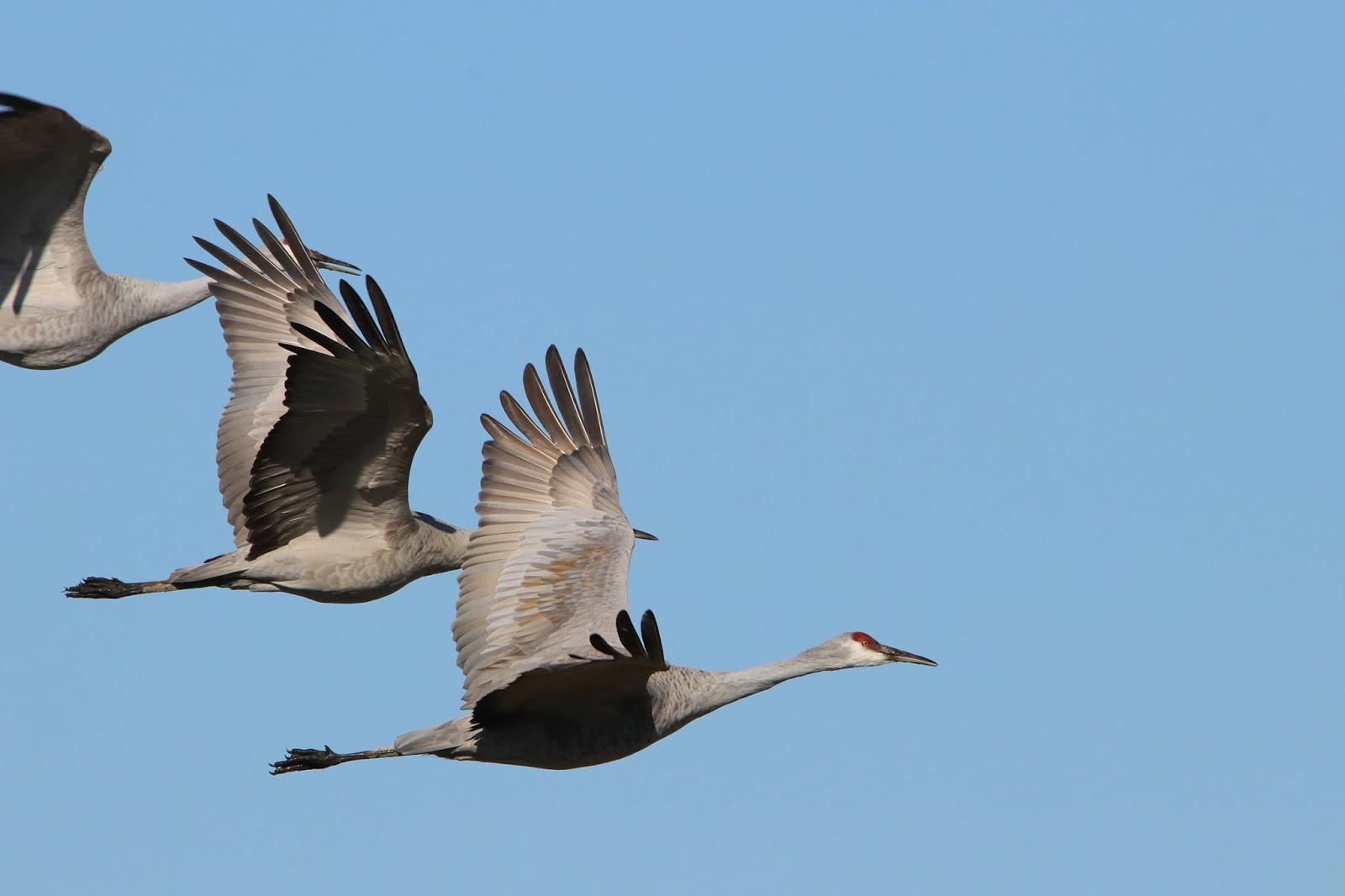
Sandhill Cranes
The view of Mt. Saint Helens from Rentenaar Road
Afterwards, we decided to take a look for the Yellow-bellied Sapsucker that had been found earlier in the week, not far from there. Not to be confused with the one in Beaverton that’s been hanging around reliably for months. This new one, in Columbia County, had been found along a paved trail that runs just behind the residential area. Sure enough, it turned up at the precise intersection (with Bird Rd., appropriately enough) where others had seen it.
It was nice to get YBSA for the state to complete our sapsucker set for Oregon. I miss seeing them reliably like we did when we lived back East, but at least we still manage to see them every year when we travel to Texas for the holidays. This one flew a circuit between only three or four trees, and never left the tiny perimeter it established for itself.
The sapsucker sees a couple of saps
While the sapsucker was busy sucking sap on high, the lower trunk had a
couple of Brown Creepers creeping, until one of them stopped creeping
and started sunning. It found a cushy patch of moss and spread itself to
soak up some rays. It's hard enough just to catch one staying in one
spot for more than a second, it was unprecedented that we found one in
good light and posing in all its Certhiid glory.
Brown Creeper
We were heading to Beaverton next to run some errands and pay a visit the best noodle house around (Frank’s), so we figured we might as well pull a twofer, and see if we could turn up the other Yellow-bellied Sapsucker. We pulled up to Commonwealth Lake Park, and found the sweet gum trees easily enough. We even spotted a sapsucker right off the bat, but it ended up being a Red-breasted. We walked the path around the lake and found the resident ducks and grebes totally, ludicrously photogenic.
Pied-billed Grebe
American Wigeon
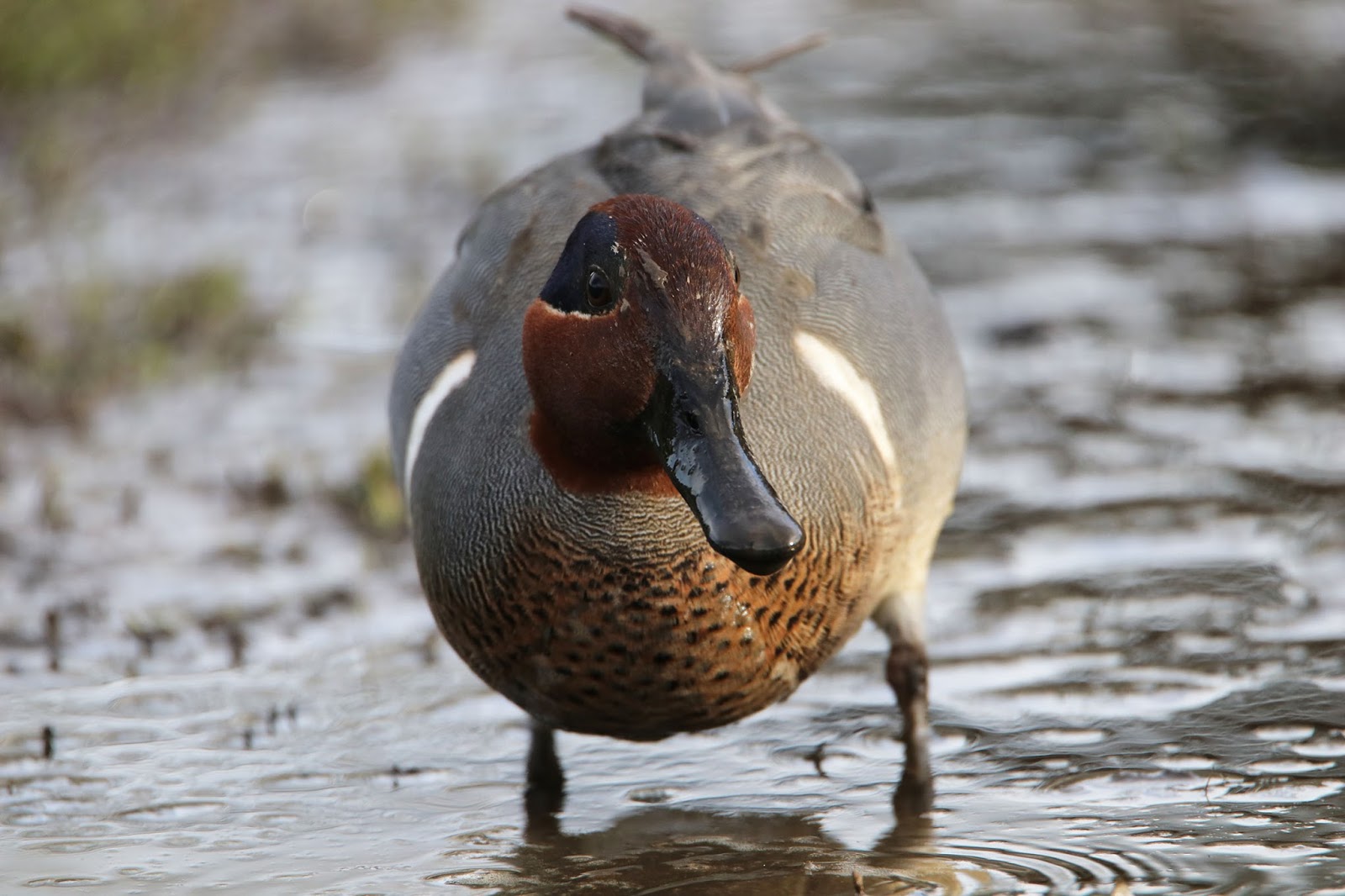
The American Wigeon were as tame as domestic Mallards, either swimming right up to the edge of the lake, or feeding en masse on the lawn and chasing breadcrumbs. A pair of Green-winged Teal even got into the action and rooted around in the mud and the puddles while I crouched down a few feet away.
Green-winged Teal
The following day we drove over to Newport for a quick coast trip. We strolled around Hatfield Marine Science Center where we picked up some year birds, but nothing mind-blowing. Our best find of the day came later at Ona Beach State Park, and it did actually blow our minds, even if it looked like it had been dead awhile (R.I.Petrel). From a distance it looked like a sub-adult gull, but up close we made out the naricorn. The bill was too short and stout for a shearwater, and eventually we figured out we had a Northern Fulmar on our hands. Pretty damn cool.
Northern Fulmar
From there we visited the Beaver Creek Natural Area where the clever Steller's Jays were finding a way of getting around the suet baffle
Just a couple of birds hanging out
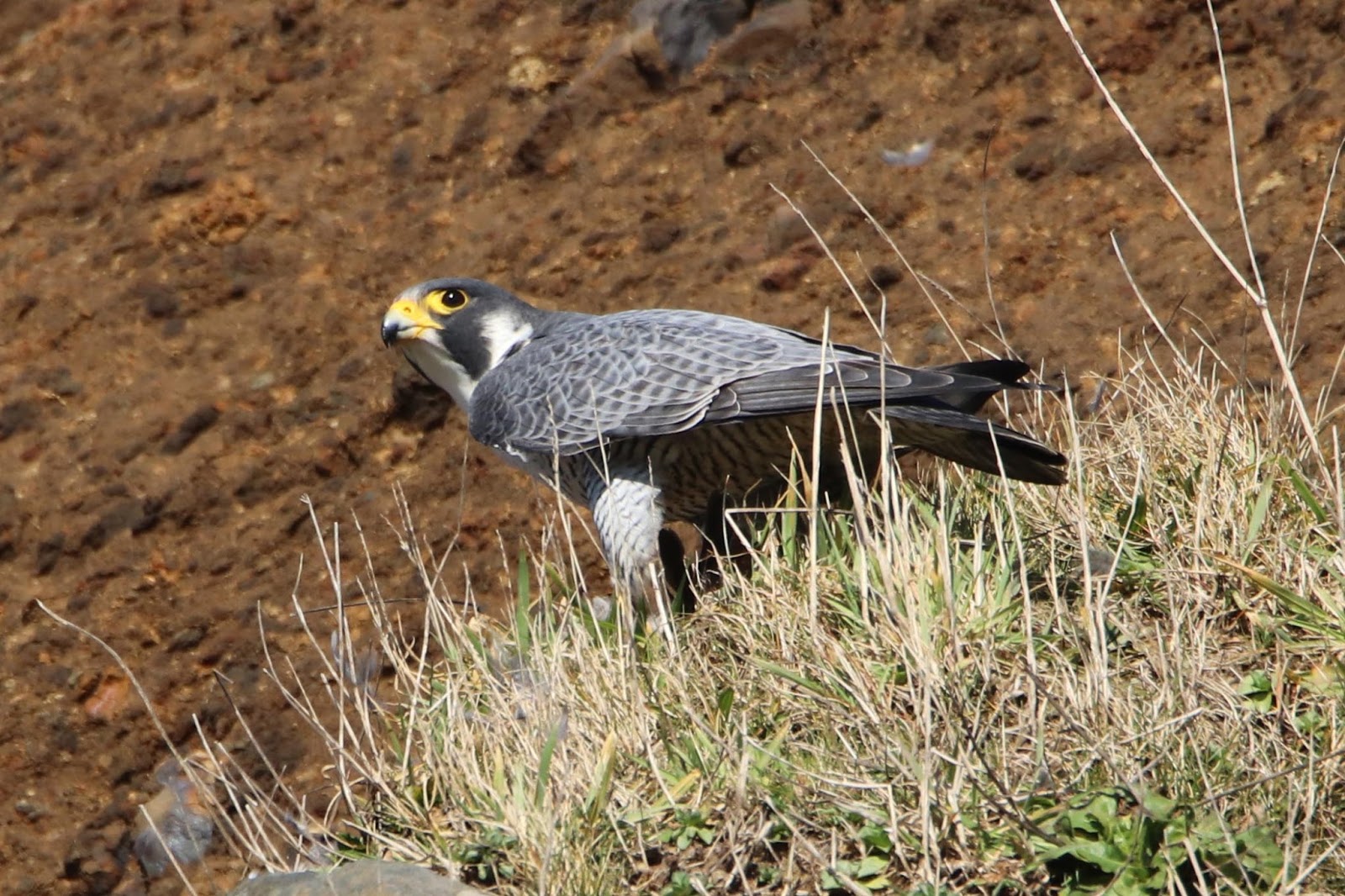
We wrapped up the weekend by heading over to Yaquina Head Outstanding Natural Area, where you can always see the pair of Peregrine Falcons that call the cliffs outside the visitor's center home. One of them had a small bird that it spent some time plucking and tucking into. Not a bad finale to a pretty packed weekend.
Peregrine Falcon
Underneath its tail you can see a leg and foot of its prey sticking out
Sauvie Island is a wildlife oasis about 10 miles northwest of downtown Portland. It may be well-known to some for its pumpkin patches and corn mazes on the farms in the fall. But many others enjoy it for its land set aside as a wildlife area. In the winter, this place is teaming with birds. Earlier in the winter, there can be thousands of Snow Geese mixed in with Canada and Cackling Geese.
Tons of Snow Geese from December 2014
Snow Geese coming in for a landing - December 2014
Later in the winter, the Snow Geese have gone, and the island is dominated by Sandhill Cranes. They winter there in large numbers, filling the fields to the brim with their big, shaggy gray bodies. The lovely sounds of their bugle call fills the skies and grasslands. They sure are a sight for sore eyes for us former Floridians. South Florida had resident populations, and it was not too uncommon to see these guys just hanging about the wetlands or even business parking lots!
Sandhill Cranes in a field
Coon Point has a dike where you can overlook a lake and open fields. The highlight when we last visited in late February was a pair of nesting Bald Eagles. They would fly from the nest to a perch just off of the main walking trail right in front of the parking area. One could easily spot them driving down the road. The morning fog made for some moody pics of these majestic raptors.
One of the best spots to bird on Sauvie Island is the viewing platform overlooking a lake that is chock full of waterfowl. On our recent visit, there were lots of Canvasbacks (maybe the most we’ve seen in one spot?) and Tundra Swan. And among the honking of those Tundra Swans, we heard the unmistakable trumpet sounds of Trumpeter Swans! There were just a few hanging out, but we were able to locate these larger-bodied swans amongst the other white bodies in the lake. And this was the first time we’d actually heard these trumpet sounds in person, so it was quite a treat!
Tundra Swan
A couple of Trumpeter Swans
More Sandhill Cranes line the lake at this observation deck, and they fly over almost consistently. It really just never gets old seeing and hearing these guys. I could just watch them all day. They are just such a joy to be around.
Another hot spot of Sauvie Island is Rentenaar Road, or also fondly known as “sparrow road.” Some guy we ran into at a major sparrow viewing point (where people will often leave bird seed) mentioned that he had previously met a couple of ladies who counted up to 11 species of sparrow on that road! We had eight including: Song, Fox, White-Crowned, Golden-Crowned, Lincoln’s, and the hard-to-find White-Throated Sparrows, as well as Dark-Eyed Juncos and Spotted Towhees. We dipped on a Swamp Sparrow that was farther down the road that another birder had spotted just moments before we got there. And we did not get Savannah nor the elusive Harris’s Sparrow.
Golden-Crowned Sparrow
Golden-Crowned Sparrow
Lincoln's Sparrow
White-Crowned Sparrow
Golden-Crowned Sparrow
We were super stoked about getting not just one, but THREE White-Throated Sparrows! This was an Oregon high count for this species for us. You can tell with at least the two individuals pictured below, the coloration is much warmer and muted in one, and very bright and vibrant in the other.
Sauvie Island is small in size, but you can definitely spend a full day birding out here. And when a non-rainy, winter’s day pops up, it’s a great way to take in the beautiful scenery and enjoy the sights and sounds of awesome wintering birds.