One thing we have done consistently over the past three years that we’ve lived in Oregon is go to the Malheur National Wildlife Refuge. I’m sure you all remember the occupation last year that threatened our beautiful piece of public land, but that was not enough to deter birders. We still went last year shortly after the refuge roads opened back up, although the headquarters was still closed for another year. However, this spring, the headquarters reopened with the great efforts of diligent workers and volunteers, and we were ready for another annual trip.
White-Faced Ibis
Tree Swallow in a nest box
Desert Paintbrush
Upland Larkspur
This place is truly a natural wonder and unlike anything else. Each time we go, we are truly in awe of this place – its geology, the wildlife, the views, and, of course, the birds.
Sagebrush sea
Chipmunk
Juvenile Sage Thrasher
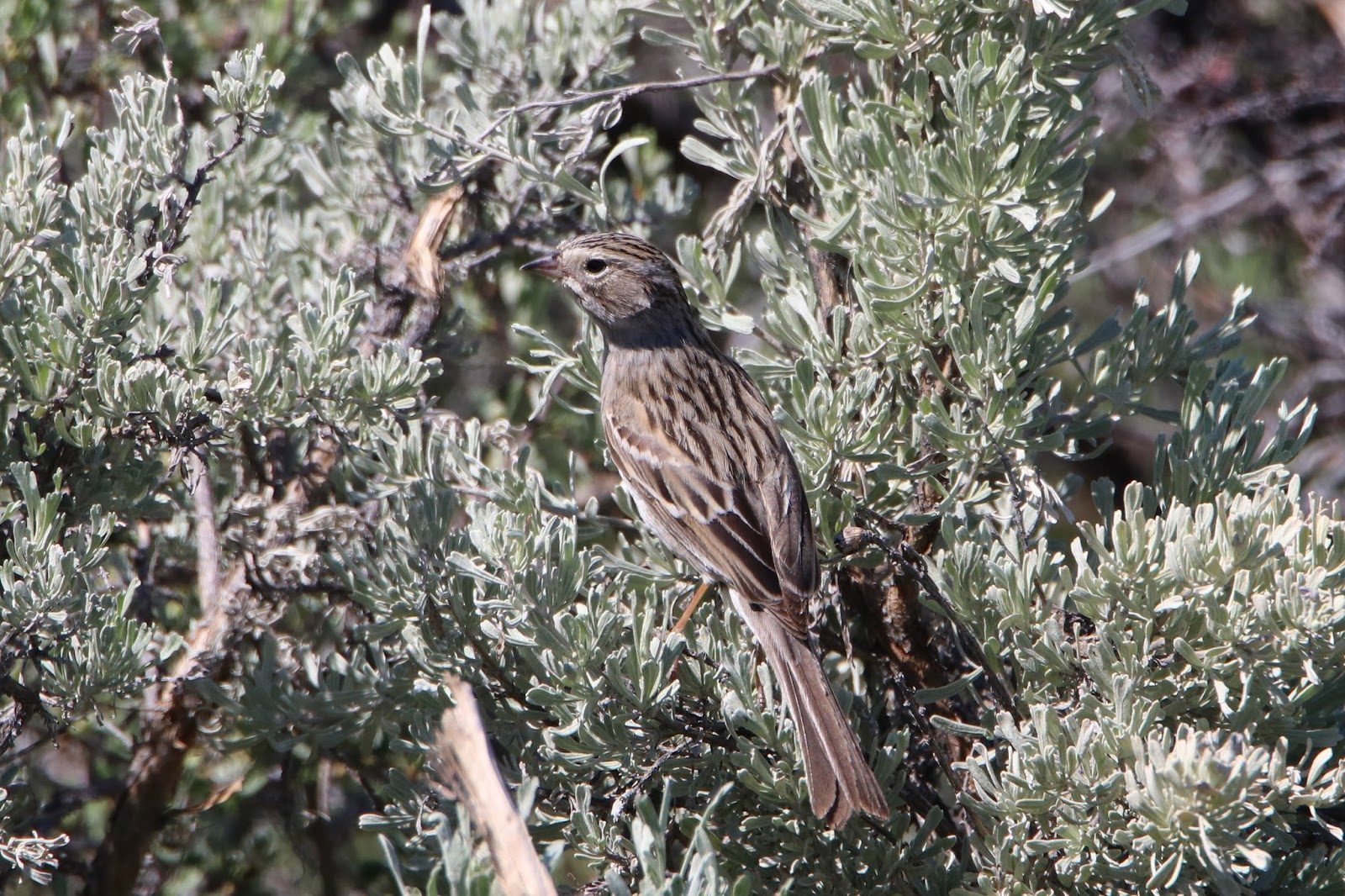
Before we arrived to Malheur, we spent the night in Bend and birded that area our first morning. We hit up the sagebrush areas in search of Green-tailed Towhees, Sage Thrashers, and Sagebrush Sparrows. We got the first two, but dipped once again on the sparrows – a sagebrush nemesis of ours. We also picked up Gray Flycatcher, watching it dip its tail and give its distinctive “chibit” call.
Gray Flycatcher
Green-Tailed Towhee
Green-Tailed Towhee blowing in the wind
Next stop was the Sage Hen Rest Area – a seemingly regular rest stop, but definitely far from it. There are nesting Mountain Bluebirds all over as there are several nest boxes posted around the grassy areas. It's hard to find any bluer blue than Mountain Bluebirds. It's almost impossible to truly capture their vibrant color in a photo.
Male Mountain Bluebird
Female Mountain Bluebird
Male Mountain Bluebird
Juvenile Mountain Bluebird
This year, we were pleasantly surprised to find nesting Say’s Phoebes, too! There was a pair working hard to gather lots of grubs and bugs to feed three hungry nestlings. Their nest was perched atop the light fixture above the women’s restroom. They surely did not mind the comers and goers that passed through the rest stop. There were also quite a few of these huge and beautiful Columbia Silkmoths - they were a beautiful red velvet color with bold patterning. I couldn't believe the Phoebes hadn't snatched them all up to feed their chicks!
Say's Phoebe
Say's Pheobe with a butterfly snack
Sweet baby Say's Phoebe - look at that precious gape!
Say's Phoebe chicks snuggling
Columbia Silkmoth
Columbia Silkmoth - Ain't it a beauty!
In the back of the rest stop is a lovely little loop trail. It’s a nice hike to see some wildflowers, butterflies, and songbirds. We picked up Brewer’s Sparrow buzzily singing away. We were caught off guard when I heard this little nasaly call up in a tree. I know it sounded kind of familiar, but I couldn’t place it. Then out in front of our eyes popped a Blue-Gray Gnatcatcher! We were used to seeing plenty of these guys in the Southeast, but this was an Oregon first for us.
Brewer's Sparrow
Brewer's Sparrow
Nelson's Hairstreak
Anicia Checkerspot
Blue-Gray Gnatcatcher
Macro shot of a flower
After our rest stop hike, we were ready for the big leagues and headed over to the headquarters of the refuge. It was great to see this place back in action – plenty of birds and birders mulling about. There did seem to be a lack of hummingbirds compared to when we came the same time of year two years ago. Bullock’s Orioles were enjoying the nectar feeders with fewer hummers to hoard them.
A peaceful moment at the Malheur NWR HQ
Black-Chinned Hummingbird
Bullock's Oriole
Bullock's Oriole
Red Admiral
Lazuli Buntings and Tree Swallows dazzled us with bright shades of blue. There seemed to be more Lazuli Buntings this year than our past two visits. The little females were plentiful - muted in color but still cute as a button.
A vibrant Male Lazuli Bunting
Male Lazuli Bunting
Female Lazuli Bunting
Female Lazuli Bunting
Tree Swallow
Steel blue Tree Swallow
There were plenty of pops of yellow all around the refuge. Bright and cheery Yellow Warblers and Western Tanagers lined the trees. And the Yellow-Headed Blackbirds were a lovely sight, although they sound like demons from hell – but still delightful.
It was so great to be back at the Malheur NWR Headquarters. Although some tension lingers amongst the locals, I know the naturalists and the birders can all agree that it's great to have this treasure up and running again.
In late April, one week after returning from Malheur via Deschutes County, a White Wagtail was reported in Bend. We were still recovering from a jam-packed weekend in Eastern Oregon, and didn't especially feel like retracing that part of our route so soon, but… a White Wagtail? We were powerless against the allure of a dapper Eurasian vagrant. It turned out that the bird didn't stick around long enough for us to have to worry about it, but then we'd begun daydreaming about all those Deschutes County breeding birds, so we started planning a weekend trip anyway.
Target numero uno was Green-tailed Towhee: a would-be lifer, and a bird I'd wanted to make a concerted effort to track down this year. We left after work on a Friday, and arrived in Sisters that evening to look for the Towhees in Deschutes National Forest. This patch of forest looked like the place where trees to go die, and we made slow progress trekking over the terrain as we climbed over old, fallen tree trunks. But there was plenty of places to perch, and offered terrific visibility. One of the first birds we found was a distant Lewis's Woodpecker on a very distant snag. There was plenty of Towhee's around -- Spotted Towhees out in the open the way we wished the Green-tailed would appear. We did catch the decent looks at a handful of Thick-billed Fox Sparrows, though (lifer sub-species!).
View of Mt. Washington from Deschutes National Forest
(Thick-billed) Fox Sparrow
Maureen was having better luck with the Towhee's than I was, and they always dropped out of sight before she could put me on them. It must have happened four or five times that she called them out, and then they'd vanish. At least I could hear them "mew"-ing around me, but with the light fading, I was starting to get desperate. Then just as we were heading back to the car, we tracked one down that popped up right in the open, 10 feet away, and starting singing it's heart out! We thought this would have been our best (only?) bet for Green-tailed Towhee's this trip, but the very next morning, we found ourselves serenaded by a pair shortly after stepping out of the car amid a vast, open expanse of sagebrush. But the most salient, and numerous, birds were the dozen or so Gray Flycatchers, singing, and tail-dipping all over the place.
Green-tailed Towhee
Gray Flycatcher
We did swing by Hatfield Lake, where the wagtail had been seen. We didn't have any hopes that it had stuck around and eluded everyone else for the past two weeks, but the place is otherwise renowned for vagrants, and would be an easy place to pick up all sorts of waterfowl. We ended up taking a trail that turned out not to be a trail, and flushed something huge that flew off a short distance. We tracked it down, and soon found ourselves face-to-face with a Great Horned Owl. Also along the trail / not-a-trail was a beautiful Nelson's Hairstreak that was intensely committed to a particular Pale Wallflower. We suspected it was laying eggs, but couldn't find any after it flew off.
Great Horned Owl
Just a neat-looking tree
Nelson's Hairstreak
Next on the agenda: woodpeckers. We got a tip about some spots to look for Black-backed Woodpecker, and some spots for Williamson's Sapsucker. We gave the sapsuckers a go, and were rewarded with brief but spectacular looks at a female flycatching. One foray brought it right out over our heads! Not bad for our first encounter.
Williamson's Sapsucker
Iris
Western Fence Lizard? Sagebrush Lizard? I can never tell them apart
We thought we would head to Smith Rock SP the next day and pick up White-throated Swifts, but the place was absolute chaos. We arrived about 10 minutes before they set up for a half-marathon. We were faced with either leaving immediately, or getting stuck there. We opted to leave for Sisters, and were glad for it. But not before a quick stop at Cline Falls SP where we had a nice Prairie Falcon circle overhead for a few minutes.
Prairie Falcon
Some cool fungus
More cool fungus
Common Garter Snake
Our first stop in Sisters was Calliope Crossing, for, what else? Calliope Hummingbirds. We met a couple who hadn't seen them where they're usually found, but we managed to find something special on our own. After establishing that the buzzing that blew past us was definitely a hummingbird, and not a bee, we tracked it to its small, silken nest. What luck!
Calliope Hummingbird
Townsend's Warbler
Friendly and interesting bugs kept landing on us in Sisters to our great delight. Clockwise from left: ribbed pine borer, mayfly, giant stonefly
Then on to Cold Springs Campground, where a pair of White-headed Woodpeckers was still busy preparing for nesting season. The male was doing all the excavating, while the female was farther off calling to check on his progress. His brief reply seemed to say, "yeah, yeah - I'm working on it." His industriousness outlasted our visit, and he was still hard at work by the time we left.