One thing we have done consistently over the past three years that we’ve lived in Oregon is go to the Malheur National Wildlife Refuge. I’m sure you all remember the occupation last year that threatened our beautiful piece of public land, but that was not enough to deter birders. We still went last year shortly after the refuge roads opened back up, although the headquarters was still closed for another year. However, this spring, the headquarters reopened with the great efforts of diligent workers and volunteers, and we were ready for another annual trip.
White-Faced Ibis
Tree Swallow in a nest box
Desert Paintbrush
Upland Larkspur
This place is truly a natural wonder and unlike anything else. Each time we go, we are truly in awe of this place – its geology, the wildlife, the views, and, of course, the birds.
Sagebrush sea
Chipmunk
Juvenile Sage Thrasher
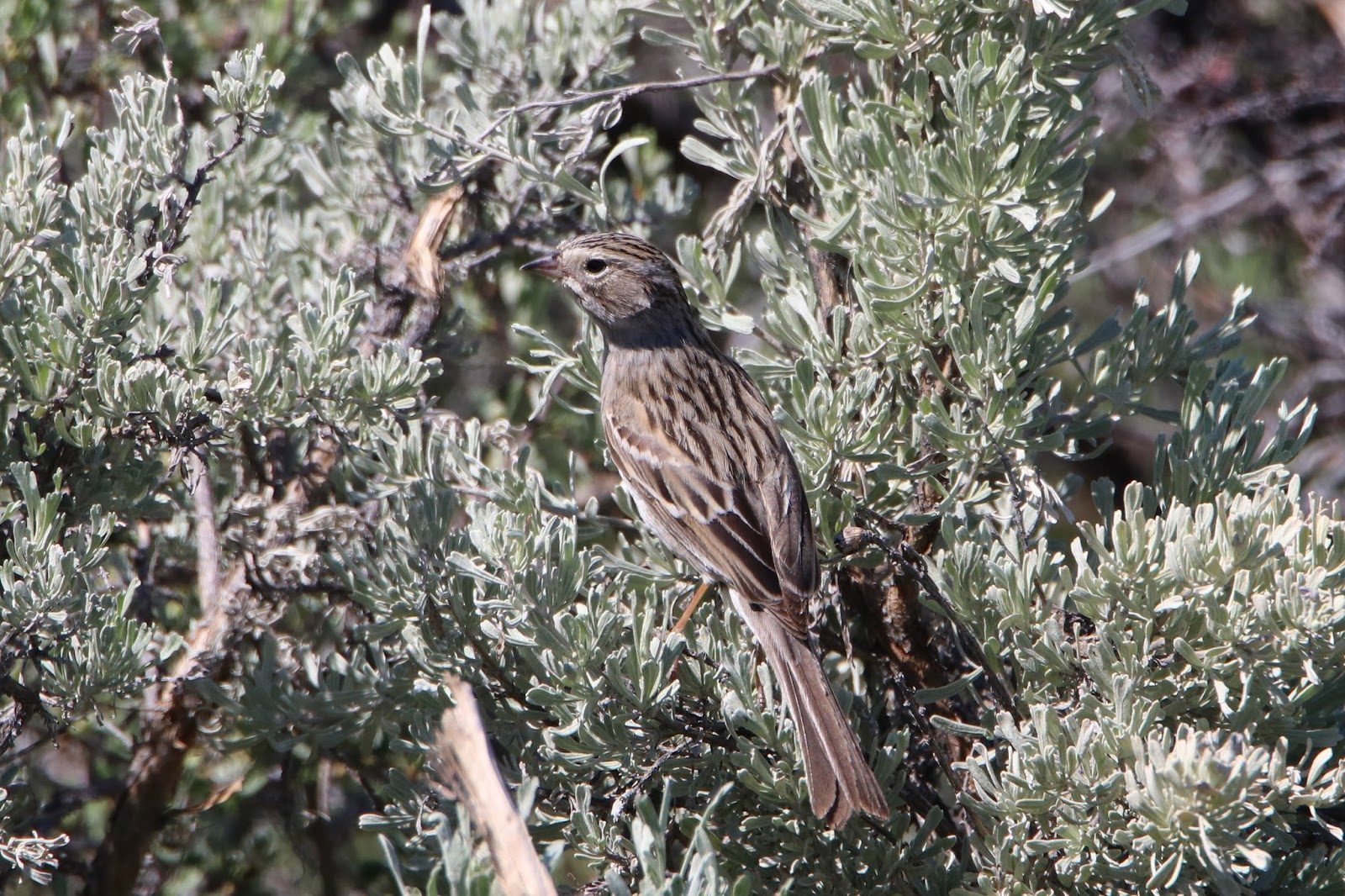
Before we arrived to Malheur, we spent the night in Bend and birded that area our first morning. We hit up the sagebrush areas in search of Green-tailed Towhees, Sage Thrashers, and Sagebrush Sparrows. We got the first two, but dipped once again on the sparrows – a sagebrush nemesis of ours. We also picked up Gray Flycatcher, watching it dip its tail and give its distinctive “chibit” call.
Gray Flycatcher
Green-Tailed Towhee
Green-Tailed Towhee blowing in the wind
Next stop was the Sage Hen Rest Area – a seemingly regular rest stop, but definitely far from it. There are nesting Mountain Bluebirds all over as there are several nest boxes posted around the grassy areas. It's hard to find any bluer blue than Mountain Bluebirds. It's almost impossible to truly capture their vibrant color in a photo.
Male Mountain Bluebird
Female Mountain Bluebird
Male Mountain Bluebird
Juvenile Mountain Bluebird
This year, we were pleasantly surprised to find nesting Say’s Phoebes, too! There was a pair working hard to gather lots of grubs and bugs to feed three hungry nestlings. Their nest was perched atop the light fixture above the women’s restroom. They surely did not mind the comers and goers that passed through the rest stop. There were also quite a few of these huge and beautiful Columbia Silkmoths - they were a beautiful red velvet color with bold patterning. I couldn't believe the Phoebes hadn't snatched them all up to feed their chicks!
Say's Phoebe
Say's Pheobe with a butterfly snack
Sweet baby Say's Phoebe - look at that precious gape!
Say's Phoebe chicks snuggling
Columbia Silkmoth
Columbia Silkmoth - Ain't it a beauty!
In the back of the rest stop is a lovely little loop trail. It’s a nice hike to see some wildflowers, butterflies, and songbirds. We picked up Brewer’s Sparrow buzzily singing away. We were caught off guard when I heard this little nasaly call up in a tree. I know it sounded kind of familiar, but I couldn’t place it. Then out in front of our eyes popped a Blue-Gray Gnatcatcher! We were used to seeing plenty of these guys in the Southeast, but this was an Oregon first for us.
Brewer's Sparrow
Brewer's Sparrow
Nelson's Hairstreak
Anicia Checkerspot
Blue-Gray Gnatcatcher
Macro shot of a flower
After our rest stop hike, we were ready for the big leagues and headed over to the headquarters of the refuge. It was great to see this place back in action – plenty of birds and birders mulling about. There did seem to be a lack of hummingbirds compared to when we came the same time of year two years ago. Bullock’s Orioles were enjoying the nectar feeders with fewer hummers to hoard them.
A peaceful moment at the Malheur NWR HQ
Black-Chinned Hummingbird
Bullock's Oriole
Bullock's Oriole
Red Admiral
Lazuli Buntings and Tree Swallows dazzled us with bright shades of blue. There seemed to be more Lazuli Buntings this year than our past two visits. The little females were plentiful - muted in color but still cute as a button.
A vibrant Male Lazuli Bunting
Male Lazuli Bunting
Female Lazuli Bunting
Female Lazuli Bunting
Tree Swallow
Steel blue Tree Swallow
There were plenty of pops of yellow all around the refuge. Bright and cheery Yellow Warblers and Western Tanagers lined the trees. And the Yellow-Headed Blackbirds were a lovely sight, although they sound like demons from hell – but still delightful.
It was so great to be back at the Malheur NWR Headquarters. Although some tension lingers amongst the locals, I know the naturalists and the birders can all agree that it's great to have this treasure up and running again.
A few weeks ago, Maureen and I headed to eastern Oregon to see some great birds, and celebrate our 10-year(!) anniversary. We booked a trip to Malheur NWR before the refuge actually opened back up, post-occupation, and lucked-out when they announced that everything would be accessible again, except for the HQ. Since we were heading that way anyway, priority numero uno would be an overnight stop in Bend in hopes of seeing a Greater Sage-grouse lek.
Pronghorn
Pronghorn butt
Yellow-bellied Marmot
The adventure started on our first night out, though. Just as we were heading into the mountains, not long before we headed into a surprise blizzard, with the sun dropping quickly behind us, we found ourselves at a living roadblock. A gigantic Elk was straddling our narrow lane (lifer mammal, finally). I braked and it took off downslope like a lightning bolt.
Sage-grouse, we heard, might be found strutting about from an hour before sunrise to an hour after. We headed out plenty early, and made a beeline for the coordinates of the eBird hotspot. Nothing. We pulled over and hoped for the best when a pair of birders with the same goal pulled up. They seemed just as lost as us, but fortunately they knew who to call for more specific directions, and soon we convoyed over to the right spot.
Greater Sage-Grouse lek
For the most part, the bulk of the grouses (grice?) stayed mostly obscured behind tall grasses, but the occasional male would wander over toward a clearing, giving open, albeit distant, views. As far as we could tell, there were at least 13 males putting on a show, with no females to impress but Maureen (sorry guys, she's taken).
Maureen taking her photography to new heights
Even though we found them at about sunset, we still got to spend another two hours with them. Eventually, around 8:30 a pack of coyotes started howling from far off, but it was enough to spook the grouses/grice and they all scattered.
With our main target out of the way, we headed to Malheur NWR. Our first stop in Harney County was the Sage Hen Rest Area, which we remembered fondly from last year for the omnipresent Mountain Bluebirds taking advantage of the nest boxes hung all around. Also along Hwy 20 we had some nice looks at Pronghorn just off the side of the road. It's great to come out this way, and see these awesome animals everywhere. It's especially great when they're not sprinting away from you at 55 mph (fun fact: Pronghorn aren't true antelopes; their closest relatives are giraffes and okapis).
Mountain Bluebirds
Mountain fluffball
Pronghorn
Now we hit Malheur proper. OR-205 runs south along the length of the refuge, from Burns to Fields, and some of the best birding opportunities are along here. Not only did we find thousands of Snow and Ross's Geese, we started picking out dozens of Black-necked Stilts and American Avocets - some of our favorites shorebirds that you'll see featured in a future post.
Snow and Ross's Geese, Black-necked Stilts, and American Avocets
Yellow-headed Blackbird
Say's Phoebe
The refuge HQ is still closed while the authorities catalogue the evidence that will hopefully keep the Bundy crew in prison for the maximum sentence (P.S., fuck the Bundys). The HQ is spectacular, and it was a shame to pass it up, but the nearby Field Station was open. It was too early for the Cliff Swallows to start nesting like we found them last year, but we were content with some splashes of yellow that brightened up the place.
(Audubon's) Yellow-rumped Warbler
Yellow-headed Blackbird
Belding's Ground-squirrel
Swainson's Hawk
Down the auto route tour, we started seeing Black-tailed Jackrabbits in greater numbers. We must have seen 50 over the weekend, darting every which way, including out in front of the car.
Black-tailed Jackrabbit
Tree Swallows
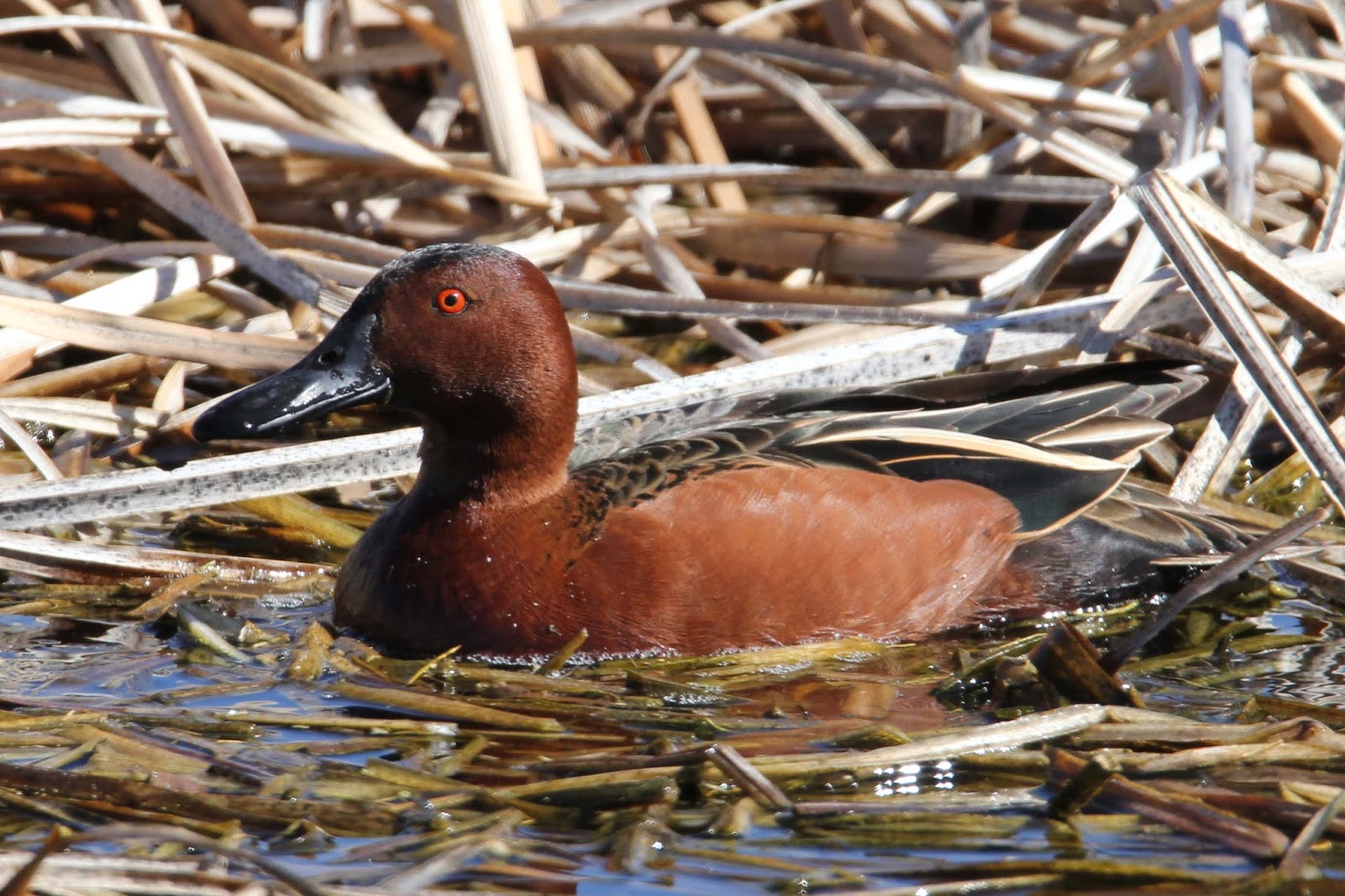
Cinnamon Teal pair
We would spend the night in Frenchglen (population: 8), but when we got into town there was still enough light for one more stop, so we headed to P Ranch for a quick stroll. As the sun started to drop, the Turkey Vultures started crowding into their roosts, the most prominent of which was an old fire lookout (I assume). At the same time, we started hearing the most eerie sound all around us. And it kept moving, first far away, and then practically on top of us. We searched and searched, and couldn't turn up any clue until I picked out a shorebird directly above us. It took some detective work, but we soon figured out it was being made by several Wilson's Snipes. It wasn't a call exactly, but the winnowing noise they make with their tail feathers as they display in flight. Between that and the colors of the sunset reflected off the mountains, it was a truly awesome end to our first day.