Showing posts with label Birds of Prey. Show all posts

Monday, February 27, 2012

The Smallest Kestrel in the World

Occasionally, we see American Kestrels described as "the second smallest kestrel in the world." Well that's fine, but I say let's give credit where credit is due. If you want to see a kestrel that's truly tiny, you'll have to travel half-way around the globe (although I don't recommend doing it solely for that purpose).


As Maureen mentioned last week, we travelled to the Seychelles islands in the summer of 2009. This archipelago nation is relatively isolated in the Indian Ocean, meaning that a good deal of what we saw is unique. We'll be showing off some of the other endemics in the near future, but right now I'd like to introduce you to the Seychelles Kestrel.


The Seychelles Kestrel is the only resident falcon in Seychelles' granitic islands. There's no mistaking it for anything other than a kestrel, even if the only other one you've seen is its American cousin: its a compact falcon that uses the exact same color palate. But, whereas the male American Kestrel has blue-gray wings and a rufous tail, the Seychelles Kestrel is the exact opposite. The Seychelles Kestrel also has an unmarked breast, and a wing patterning that's more spotted than barred. And I have I mentioned that it's the smallest kestrel in the world? At 7-9 in in length, it's about 2-3 inches smaller than the American Kestrel.


Over the course of our two weeks' visit, I was fortunate enough to see this bird twice. Both times it was using the same telephone wires as a perch, where it stayed put for as long as we watched it. Even though it didn't perform any aerial acrobatics for us, how could we not stand in awe of this beautiful bird of prey?


If the locals don't experience the same feelings that we did, at least they're shedding some of their old fears. According an old superstitious belief, seeing one of these raptors outside your house meant imminent death. Both kestrels and their nests were destroyed, senselessly putting conservation pressure on a species already facing threats from several other directions. This particular brand of nonsense is all but dead today, but the kestrels' populations are still considered vulnerable. Hopefully, with luck and conservation effort, its numbers will begin to rebound, and you, too, will be able to see the smallest kestrel in the world.

Tuesday, May 10, 2011

On the Road to Ft. DeSoto

Over Easter weekend we thought we'd take advantage of our extra time off by searching for Bachman's Sparrows at Corbett Wildlife Management Area in Palm Beach County. The plan was spend our days searching the saw palmetto understorys, and our nights spent camping one of the primitive lots within the park. Once we arrived, however, the camping turned out to be much more primitive than either of us had anticipated. No clearly marked lots, no electricity, no bathrooms… no people! In addition, there had been a near total absence of migrants being seen in the weeks previous to our trip, and things didn't look any better once we had a look around. Although we had planned on staying close to home (Corbett is less than an hour from our apartment in Boca Raton), we decided on an impromptu change of setting and headed to noted migration destination Ft. DeSoto, another 3 1/2 hours away. On the way out, we did manage to find several Great Crested Flycatchers, which were the only signs of life during our brief stay at Corbett.

Great Crested Flycatcher

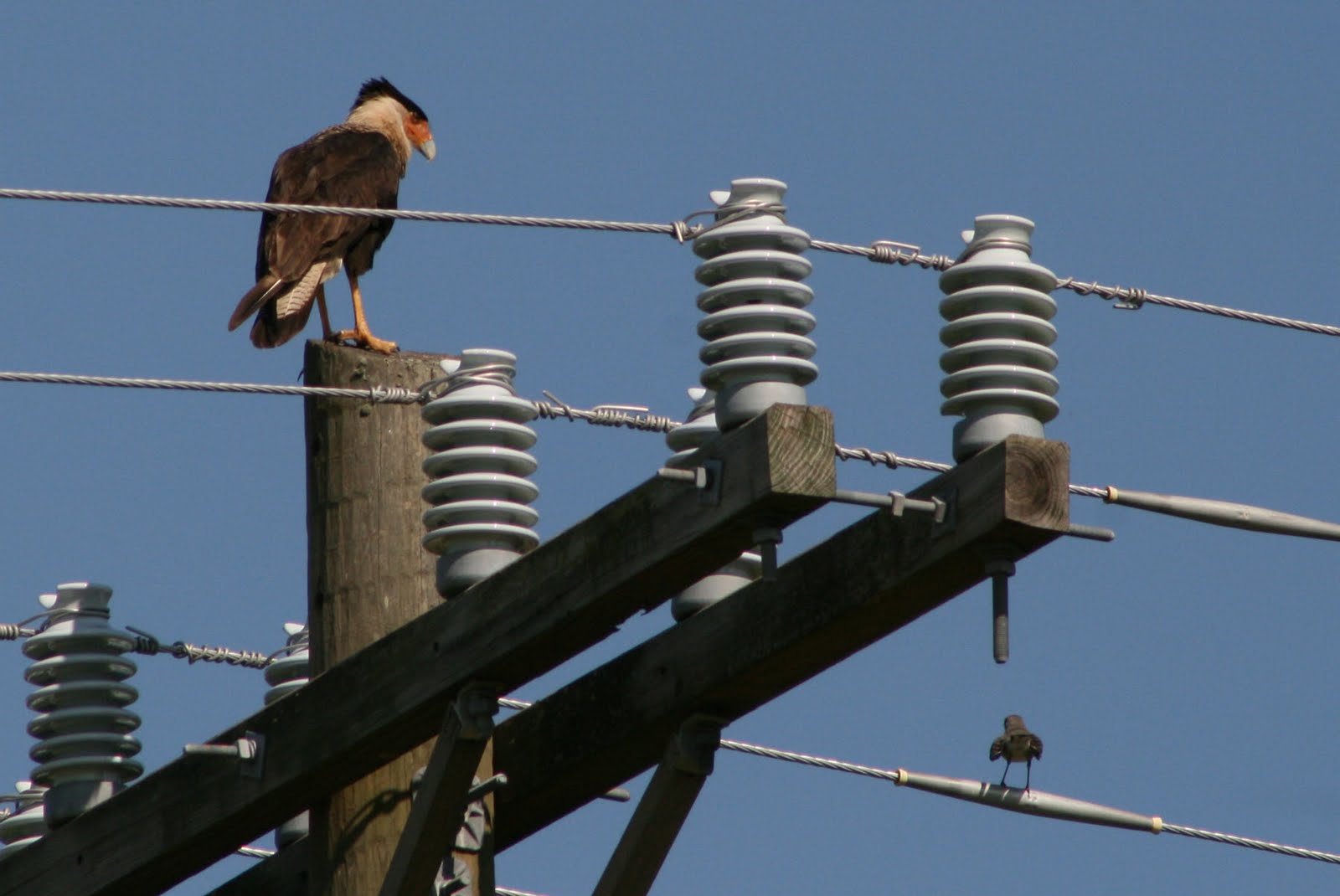
Alongside the road during our unplanned trek across the state, we had several excellent surprises. The first was a single Swallow-tailed Kite in flight, glimpsed only briefly, but always a very welcome sight. Next, we met a stretch of road with as many as half a dozen Crested Caracaras. This was the farthest south we'd ever seen them, having found them only at Viera Wetlands, previously. 

An uneasy truce

I pulled the car over to the shoulder and Maureen was able to get shots of one unfortunate specimen getting mobbed by an aggravated Northern Mockingbird. The Caracara never ceded his perch while we looked on, and neither species seemed particularly ready to capitulate any time soon. 

Trying to look the other way

Sizing up the opposition

A near-miss

Determined to stay vigilant for the next surprise, we checked and rechecked every snag and every Turkey Vulture for the unexpected, but the remainder of our drive passed without event. When we arrived at Ft. DeSoto we found the campsite packed super densely. But despite the crowds that had come to spend their three-day weekend at the beach, we managed to do some of our best shorebirding ever, the next morning. But that will have to wait for another time.

Sunday, April 17, 2011

Excursion to the Everglades

Nick and I are knew that we couldn't make the most of our time here in South Florida without taking a good trip to the Everglades. We'd done a day trip to Shark Valley before, but we decided the best way to really experience it would be to camp there so that we could immerse ourselves in the awesomeness that is the Everglades. So we drove on a Friday evening down into Everglades National Park to Long Pine Key campground. When we get there, the first thing we noticed was how secluded this area really is. There are just tons of tall slash pines - their silhouettes lining the dark sky. And we lucked out with perfectly clear skies so you could see all the stars.


Long Pine Key


Right away, we realized we were in a new world. As soon as I walk into the ladies restroom, I notice a tiny scorpion on the floor! It was only about an inch and a half long. We had no idea we even had scorpions in South Florida! And we continue to see some awesome stick bugs along the outside bathroom walls. We knew right away how awesome this trip was going to be.


Baby Hentz's Striped Scorpion


Palmetto Walkingstick


We quickly set up camp and hit the hay. We were awakened around 6am to unfamiliar but intriguing sounds. I knew that these were not only bird sounds, but NEW bird sounds. Nick had remembered these sounds as Chuck-Will's-Widows from our Bird Songs CD, and sure enough, they were! These were life birds for us! It started with just a few distant calls, and then we seemed to be surrounded by them. We laid there in our tent with only the mesh top between us and the sky, and we felt completely immersed in the forest as the calls got louder and more frequent. It was one of those really incredible bird moments that we'll never forget. But never did we actually see one of these new life birds. And quickly, the other birds of the forest joined in the morning chorus - including Cardinals, Eastern Towhees, and Gray Catbirds.

Sunrise in the Everglades


Eastern Towhee


Gray Catbird


We then hit up the famous Anhinga Trail. As we turn on the road leading to the trail, we see a sign about the possibility of panthers - an incredible yet daunting warning. Unfortunately, we did not get to see these big cats, but I am sure that they were lurking about in the tall straw-colored grasses for which they are perfectly camouflaged. At the entrance to the trail, there are warnings about vultures ruining cars. The black vultures were abundant, and in fact, we did see one in the parking lot trying to tear up a top of a convertible Ford mustang.


Black Vulture


Black Vultures cooling off (This scene really made me laugh
for some reason...)


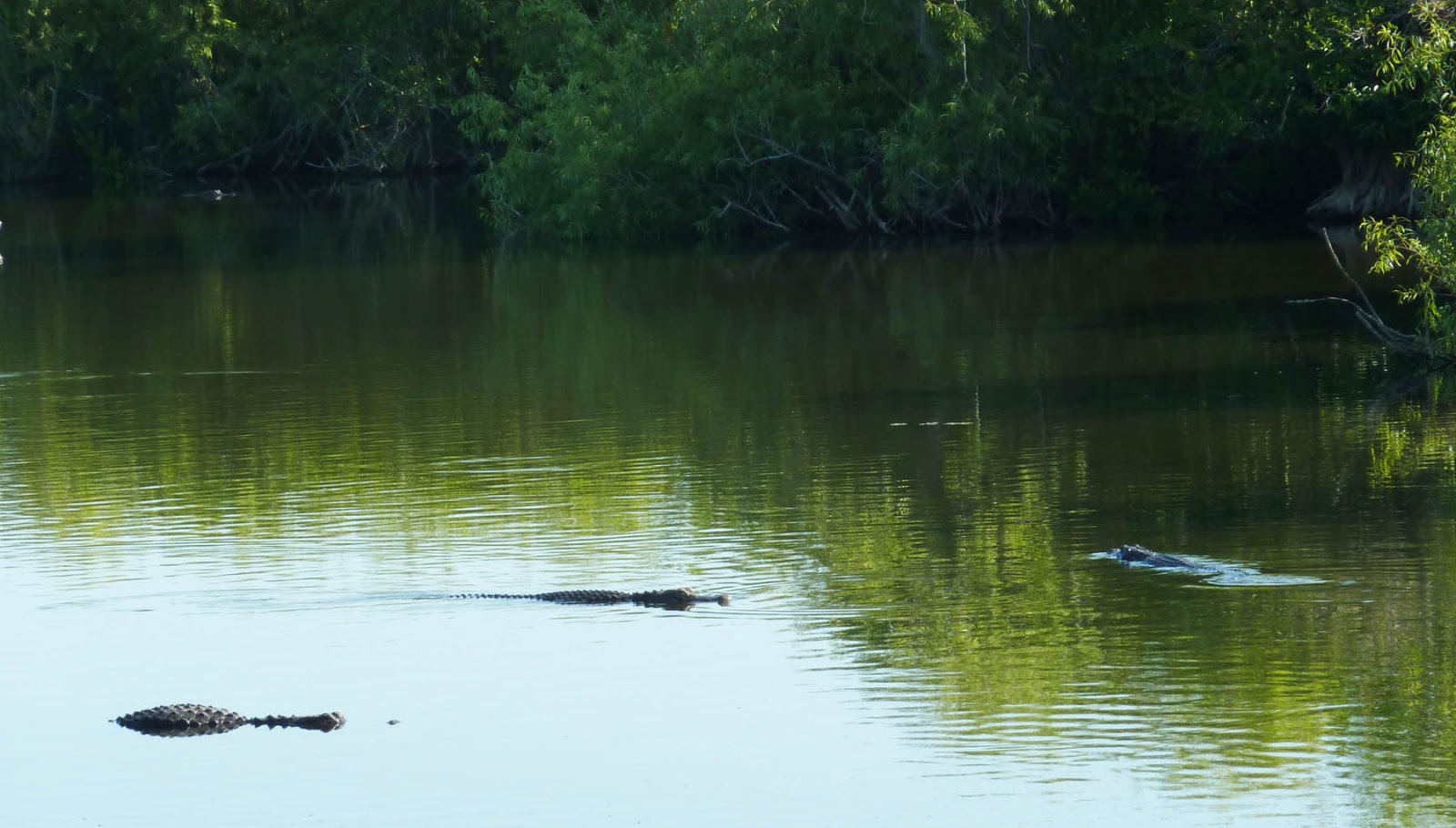
And of course we did see plenty of Anhingas, and even a mother feeding its chicks. You can see a video in our previous post. And the alligators were also plentiful, including the one hanging around under the feeding chicks, just waiting for one to fall down and be a quick snack.


Smiley Alligator

Female Anhinga feeding her chicks


Alligator waiting for an Anhinga Snack


How many Gators can you count?

Anhinga taking a break on the
boardwalk


Air Plant Flower


We saw some usual suspects, including Little Blue Heron, Great Blue Heron, Palm Warbler, Common Yellowthroat, and Red Shouldered Hawks. And surprisingly, we saw quite a number of Purple Gallinule out and about. They are usually pretty shy, but we saw a few foraging along the waterline.


Little Blue
Heron waiting for a fish


Palm Warbler

Purple Gallinule


Purple Gallinule


Purple Gallinule


The next day, we decided that we would try to get up especially early to see if we could actually try to get a view one of the numerous Chuck-Will's-Widow that fly about. A man the day before advised that we could find them all along the wires on a side road. So we woke up as soon as we heard the first set of calls while it was still dark out and drove to this secluded road. We drove up and down looking for these birds, but we had no luck. We thought we might have seen some fly by, but no definite ID's. I couldn't hear as many as the day before, but we could definitely hear them closer. We parked and walked out into the road to search on foot for a little bit. But after realizing that we were in panther territory with nobody else awake and nearby to hear our possible screams for help, we went back in the car to search again. But alas, still no sightings.


Morning fog over the swamp


One Eyed Gator

We headed to Anhinga Trail again the next morning, and we got to see the morning fog hovering over the marsh in a ghostly manner as the sun was rising. And we had a nice little surprise by a pair of Norther Waterthrush calling to each other and foraging for food while bobbing their little tails. We also had some nice views of a pair of Red-Shouldered Hawks, what appeared to be one adult and one juvenile.


Great Blue Heron


Northern Waterthrush

Adult and Juvenile Red-Shouldered Hawks

Juvenile Red-Shouldered Hawk

Me with my camera in hand

Nick getting a head start on the trail

Monday, March 28, 2011

Wellington Environmental Preserve

Yesterday morning, Maureen and I returned to Wellington Environmental Preserve for our second visit to this spacious (365 acre), brand-new public wetland. Just a few weeks ago we made our way up to twitch us some Canvasbacks, which are uncommon visitors to Palm Beach County. We had been able to find the Canvasbacks, but the vastness of the park left us wondering what we were missing.

This time around there were noticeably fewer waterfowl - an ominous sign that we're getting on with Spring, and about to lose our Winter visitors. All that remained of this group were a lone female Northern Shoveler, a male Ring-necked Duck, several Blue-winged Teals, and Florida's very own Mottled Ducks, which won't be going anywhere.

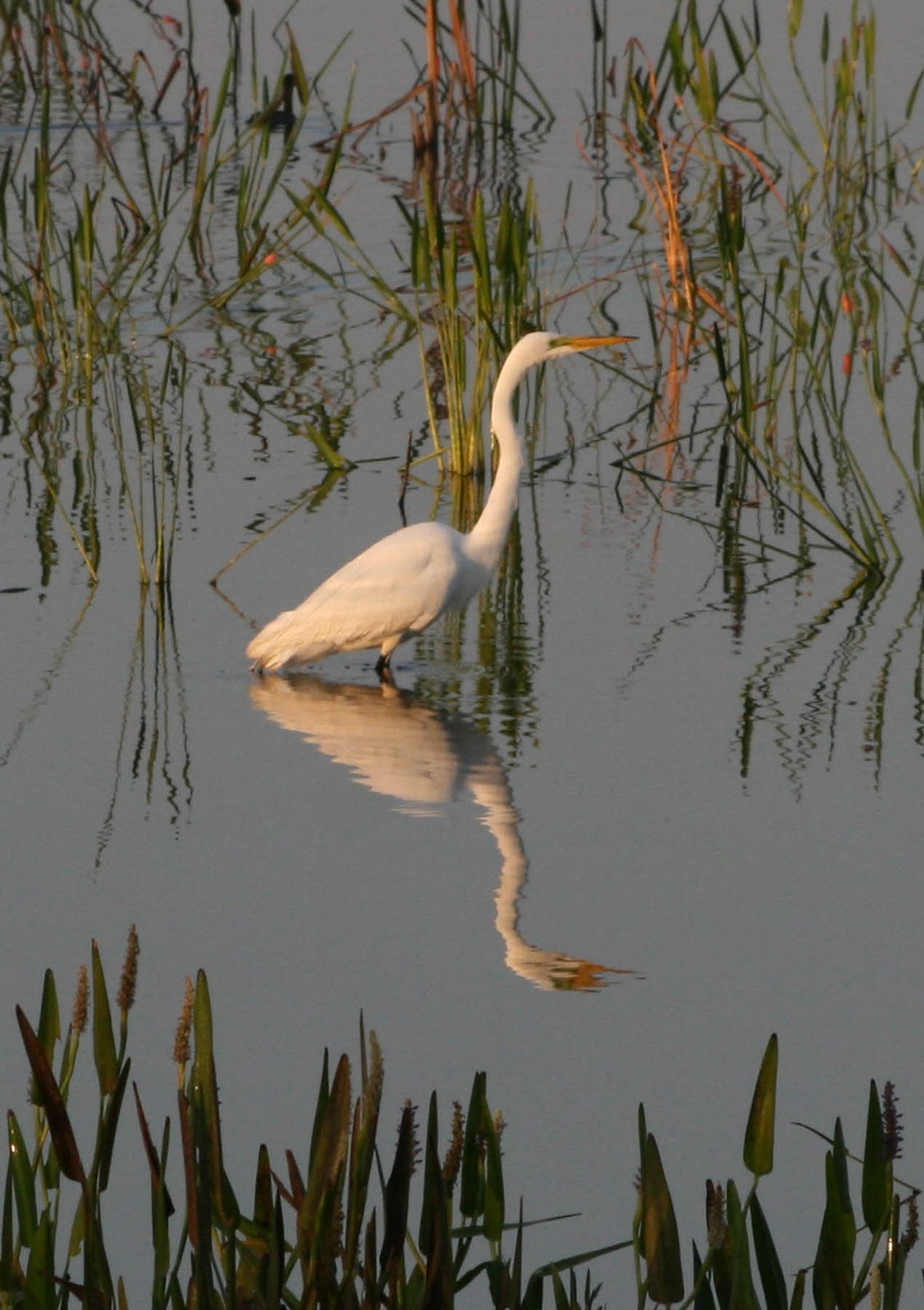
Great Egret

Right out of the car Maureen (who has more of an ear for birdsong than I do) heard an Eastern Meadowlark. Our only other Meadowlarks were during a day-trip to Galveston late last year, making this a state bird for us. It took some effort to locate where the bird was perched because of the distance their song carries. We finally picked it up as a speck across the street and in someone's private property, effectively keeping us from obtaining a better view. Once we started for the trail, though, we heard several others, which sounded like they were always just ahead of us. We were only able to locate one other, but he was pretty lively. Initially, we found him in a tree, before he flew down to the ground, walked across the path and into a clump of tall grasses (and singing the whole time). 

Eastern Meadowlark

Eastern Meadowlark

Eastern Meadowlark

One thing about Wellington Environmental Preserve is that they are Limpkins EVERYWHERE! Above all others, this is the bird that you know you're going to find when you come here. Apple snail shells litter the shores, and sometimes you even find yourself crunching a discarded shell underfoot on the boardwalk. There are so many Limpkins, in fact, that even the Limpkins want to see what else is around (see below). 


Limpkin

Limpkin

Among the highlights of the day was when we picked a single American Avocet out of a small flock of Black-necked Stilts. It's always a pleasure to pick up a new county bird, as this was for us. Still, it's a shame that we didn't get to see it stick around, since Avocets are among my favorite shorebirds, and we only see them rarely, and usually from a great distance.

The Palm Warblers are all looking fancy in their breeding plumage, which in Florida, means that they're getting ready to leave us any day now. All throughout winter, these common birds are the classic LBJs, and now look at them! It's like watching a caterpillar become a butterfly. I wish them well on their journey back north. 

Palm Warbler

When we arrived at the 6-story observation tower, we felt obligated to trudge our way up, since we had been short on time during our only other visit. It turned out to be well worth the effort. From that vantage, we were able to watch a juvenile Northern Harrier terrorize dozens of Common Moorhens and American Coots. Just a couple of minutes later, a juvenile Snail Kite flew in low from the direction that we'd just seen the Harrier disappear. 

Northern Harrier

From above, a juvenile Harrier and a juvenile Snail Kite can look remarkably similar - both are brown overall, with a broad patch of white toward the base of the tail. Luckily, we were on our toes and weren't taking anything for granted, for which we were rewarded by watching the kite snatch an apple snail out of the water. Easy prey, perhaps, but still, it's pretty awesome to watch a Snail Kite do as Snail Kites do.

Snail Kite

Snail Kite with an apple snail

Florida very fortunate to have it's very own population of Sandhills with us year-round, albeit not in anything near the numbers seen in the Platte River valley. Early on, we had a group of five fly over while making their bugling calls. This one was just taking a stroll.

Sandhill Crane

Tuesday, March 8, 2011

Viera Wetlands

We've finally arrived at the report of our third and final day of birding Brevard County, Florida - a trip that, earlier, included both Merritt Island NWR (Part 1, Part 2) and Canaveral National Seashore (here). While we would have loved to spend all of our remaining time at Viera, from sunrise to sunset, we had been keeping our eyes on the weather forecast, and expected the thunderstorms to cut our day short. While, on past occasions, we'd parked the car at the entrance and hiked our way through the trails, with the impending showers, we thought it better, this time around, to keep the car close.

Limpkin

Limpkin

The cloud cover was less than complete, and we felt reasonably sure that we'd be able to get some quality birding in. It didn't hurt when, right off the bat, we saw an adult Crested Caracara land in a distant pine alongside a juvenile.

Viera Wetlands at dawn

Driving slowly up the dirt road, and carefully scanning every which way, I excitedly called out "Eastern Screech Owl!" We both whipped our binoculars out and stretched through the car windows for a better look at the object resting on a wood post up ahead. But, embarrassingly, what I had seen had actually been the post itself, the top of which had big chunks missing out of it, and making it look vaguely like a screech owl. Sadly, this wasn't the first time my enthusiasm has created birding-induced paradolia, and I'm sure it won't be the last. 

Fortunately, there was no mistaking the two Sandhill Cranes that flew beside us. Looking over into the fields beyond the fences lining the perimeter of the wetlands, we found about a dozen more standing around. 

Sandhill Cranes

Sandhill Cranes

Although the waterfowl were much more abundant at Viera than at any other location during our trip, we didn't find any great diversity of species. The Ring-necked Ducks, Hooded Mergansers, and Northern Shovelers were some of the highlights. These are all very beautiful birds, of course, but I think I was most thankful that they broke up the monotony of the many thousands of American Coots out in front of us. 

Ring-necked Ducks

Northern Shovelers and American Coots

In the reeds along the banks, we found a secretive little thing flitting about, down where it was difficult to make make out any features. The call, however, was that of a Marsh Wren. Our only previous look at a Marsh Wren was disappointingly brief, and so we decided that we would stick it out until he gave us the looks we wanted. Little did we realize how obliging he'd be! Jumping up to the very tops of the reeds, he grabbed hold of a reed in each foot and spread his legs far apart. Over the course of several minutes, he repeated this display a couple of different times. We also discovered a handful more Marsh Wrens as we continued around the trails. 

Marsh Wren

Marsh Wren

Seeing as how difficult to find one American Bittern, we were shocked to be able to see two in one morning. The first one flushed as soon as we spotted it, but the other, farther down along the road, laid low for as long as we remained watching. 

American Bittern

American Bittern

American Bittern

While we were out to look at this second bittern, an alligator made an unsuccessful attempt at taking a coot, out in the water. The immediate response of every bird in the immediate and not-so-immediate vicinities was to get the hell out of the there as quickly as possible. Below, you can see a number of coots lined up along the banks, alongside several Blue-winged Teal. It my not be evident in the picture, but those birds weren't prepared to return to the water any time soon. 

Trying not to get eaten

Of course, seeing a Bald Eagle is always a highlight of any outing, and is an experience, that, I hope, never gets old. A single adult perched atop the tall stump of a Cabbage Palm and posed for several minutes before finding another, closer perch, and finally flying nearly right over us. 

Bald Eagle

Bald Eagle

Bald Eagle

By this point, the storm was just about upon us, and the rain began to fall. By the end of our three days, we wound up with 106 species, meeting and exceeding our fanciful hope of hitting triple digits. If you ever have the opportunity to visit Central Florida, you MUST visit these places: Viera Wetlands, Merritt Island NWR, and Canaveral National Seashore. If you need an excuse, there's always next year's Space Coast Birding Festival!

Great Blue Herons before the storm

This was more interesting than whatever was off to the right