Showing posts with label Everglades National Park. Show all posts

Saturday, June 4, 2011

Bluebirds of the Everglades

As you may have seen and read in my last post about our Everglades trip, we had a lovely encounter with a pair of Eastern Bluebirds – our first sighting in Florida. Well, that first encounter wouldn’t be the only one for that trip.

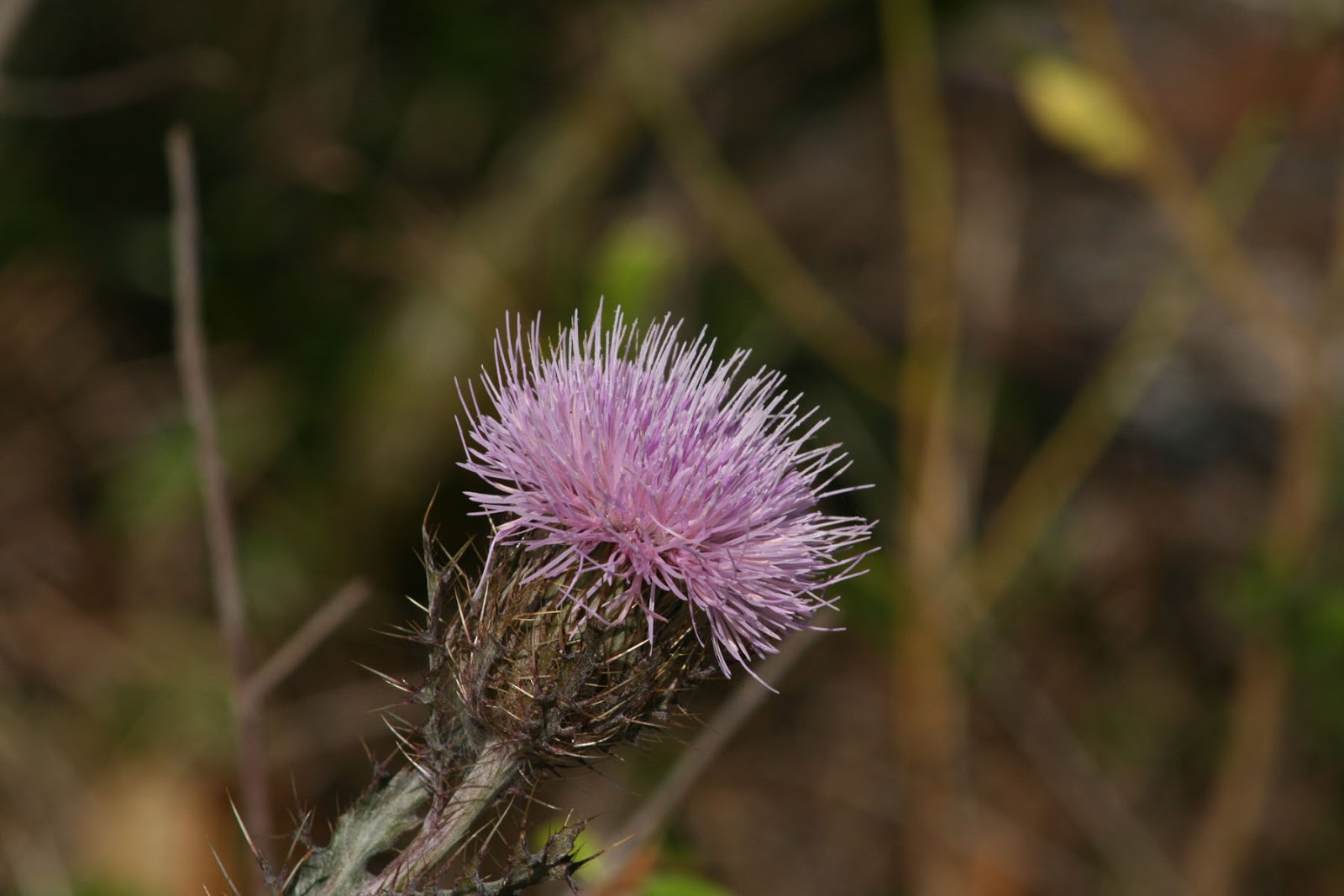
Thistle in the Everglades

A sunny flower in the Everglades

After taking a much-needed rest out of the Florida sun (in what little shade we could get at our campsite), we went out for a late afternoon stroll through a nearby trail just down the road from the Long Pine Key campground. It was pretty quiet in the area. We heard a woodpecker pecking somewhere that sounded close, but we couldn’t locate it. And as we walked along the trail, there was almost nothing (in terms of birds) but quite a few butterflies, which we later found out were Variegated Fritillaries.

Variegated Fritllary

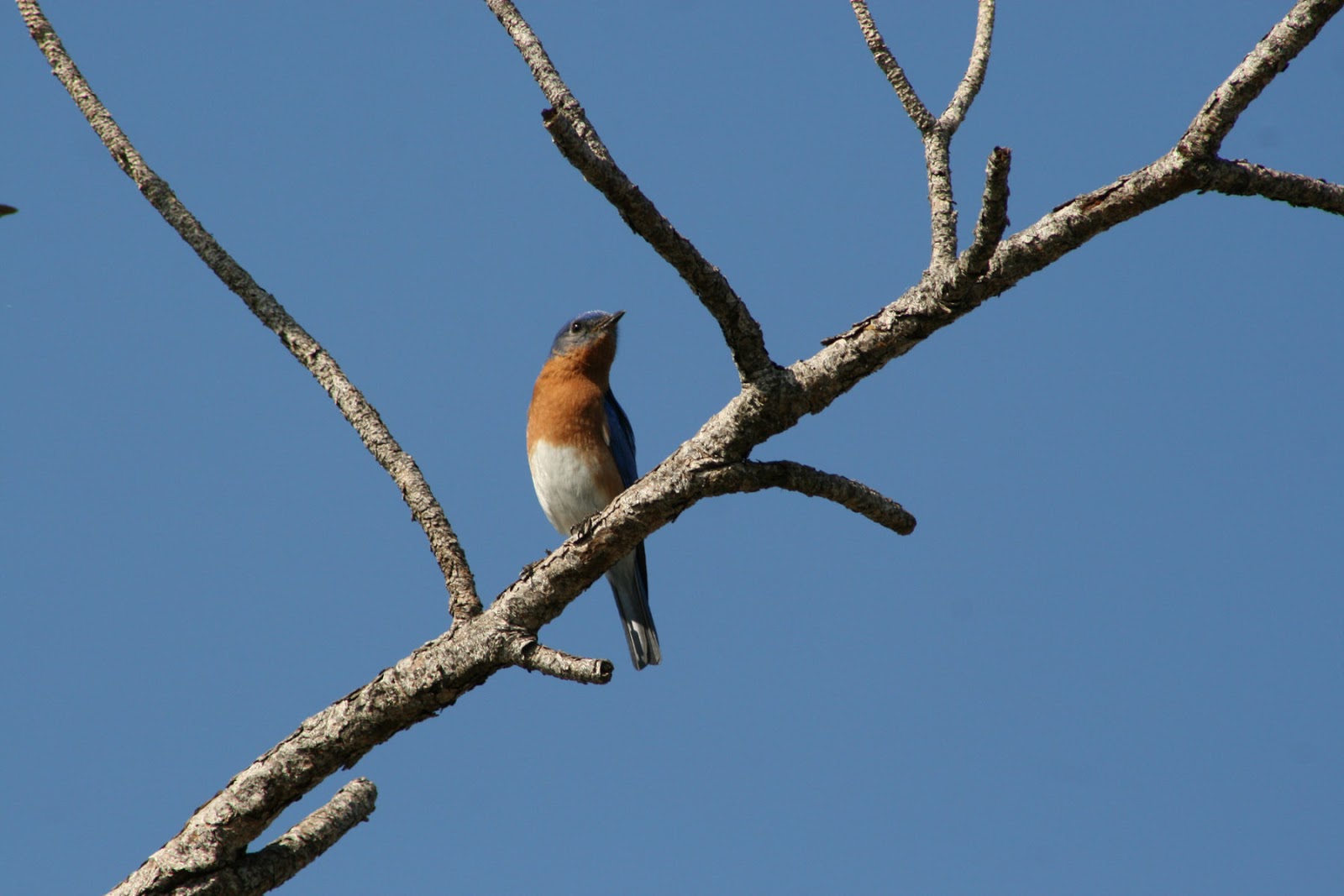
But we didn’t give up quite yet, and good thing we didn’t. Again we saw a pair of Eastern Bluebirds. We saw the duller female first. And soon to follow was the male. The female flew off and kept her distance, but the male let us get pretty close to him. We inched our ways closer and closer to him, snapping shots of him along the way until we were just beneath him. We watched as he would swoop down to grab a tasty morsel and then fly back up on his perch.

Duller, Female Eastern Bluebird darting across

Female Eastern Bluebird perched

Male Eastern Bluebird swooping up from foraging

Male Eastern Bluebird returning to his post

We watched him for a good while, admiring his brilliant blue feathers and that gorgeous burnt orange throat and chest contrasting with his bright white belly. You can see from the pictures that he is banded. We enjoyed his occasional singing and calls as he did a funny little behavior – swaying back and forth on the branch where he was perched. There wasn’t much of a breeze to cause him to move this way, so it was quite amusing – like watching Charlie Chaplin rocking back and forth on his heals while swinging his cane.

Eastern Bluebird Going back to his Perch

Putting the "wheels" down for a landing

Male Eastern Bluebird keeping an eye on us

When we finally decided to move past him, he would fly off of his perch and just get ahead of us again. It was a nice to have this encounter with him. It almost seemed like he didn’t want us to go, but I’m sure it was more like him making sure we were going to leave his territory.


Male Eastern Bluebird

Male Eastern Bluebird

Male Eastern Bluebird

Male Eastern Bluebird

We continued to walk the trail with no other sightings. So before it got dark, we decided to turn back around and head back to the car. On our way back, we somehow happened upon a grasshopper that perfectly camouflaged with the sand and dead grass. We watched it a little while, noticing it dipping its abdomen (probably its ovipositor) in the sand and being very still otherwise. We’re guessing that it was laying eggs.

Grasshopper... Possibly laying eggs?

Back at the camp, we were greeted by a contemplative mouse. He looked about as we approached him along the path. And then he quickly dashed back into the tall grasses. And then a Green Stink Bug (possibly a Southern Green Stink Bug) stopped by in the evening during our dinner.

Mouse in the grass 

The Contemplative Mouse

(Southern?) Green Stink Bug

So that was our adventure with the Everglades. We avoided being attacked by snakes, alligators, and panthers, but had a great time nonetheless ;-)
Sunday, May 1, 2011

Continuation of our Excursion to the Everglades

Our treks to Anhinga Trail proved to be a great spot for seeing some old favorites and a couple of winter and spring visitors. Nick and I also took to a number of other smaller trails along the main road to see what we could see. But by late morning/ early afternoon, birds were scarce. 

We did happen upon a few good birds, such as Gray Kingbird and a White-Eyed Vireo. But the real treat came when we happened upon a Eastern Diamondback Rattlesnake in the road. We had avoided some of the  dangers of the Everglades: the gators and the panthers. And here we were about to encounter another potential danger.


Panther Crossing


There was a group of three people standing by the snake. A woman in the group worked in the area and I believe she was leading a tour for the other 2 people. She had pointed out that the snake was dying as it was partially run over by a car. She advised that she wish she could put it out of its misery, but the law indicates one can't do such a thing.

Diamondback Rattlesnake just run over

Diamondback Rattlesnake in its final moments
This was an incredible opportunity to get a close look at a snake I would otherwise run far away from. You could see the tail was pretty mangled. The snake lay with her mouth agape, showing her deadly fangs. The woman from earlier advised to keep a safe enough distance even though she was dying since she could get one last spurt of energy and strike. We definitely kept our distance, and I let my long camera lens do the up-close work. When would we ever get to look at a rattlesnake this close again without being in serious danger?!?!

Diamondback Rattlesnake


We decided to head back to the camp to get some much needed rest after a full morning of birding as the Florida sun was kicking into full gear. Just as we pulled back into the campsite, ready to take a break, the birds kept us going just a wee bit longer. We came across a pair of Eastern Bluebirds! This was a state first for us. The male Bluebird called and sang as the female flew from tree to tree, which he shortly followed. We were very excited to see such a wonderful springtime bird right in the Everglades!


Eastern Bluebird


Eastern Bluebird flying down

Pair of Eastern Bluebirds

After following the bluebirds along, we thought, Ok, NOW it's time to get some rest. Well, once again, the birds showed us otherwise. We were headed back to the car when Nick yelled out "Northern Bobwhites!" At first, I didn't even think Nick could be right. I had no idea that there were Bobwhites in South Florida, and surely not the Everglades. But sure enough, there were two male-female pairs of Northern Bobwhites scurrying along the empty road within the campsite. The pairs ran from grassy patch to grassy patch, and very quickly, I might add. They were calling out to each other in their cute quail-y voices.


Four Northern Bobwhites scurrying along


A Lovely Male Northern Bobwhite

One pair stayed in a brushy area as another pair dashed and foraged. I had a heck of a time trying to catch up to get shots of these gorgeous birds, but I did manage to take a few. Nick and I then learned that the Florida race of Northern Bobwhites have black eyestripes rather than reddish-brownish. These birds are incredibly striking with their gorgeous plumage.


Pair of Northern Bobwhites (Left Female, Right Male)


A nice look at the plumage of a male Northern Bobwhite


As the Bobwhites disappeared into the brush, Nick and I finally got some rest. But we were back in action to hit up another trail by the campsite in no time for the late afternoon. More from that trip to come...

Sunday, April 17, 2011

Excursion to the Everglades

Nick and I are knew that we couldn't make the most of our time here in South Florida without taking a good trip to the Everglades. We'd done a day trip to Shark Valley before, but we decided the best way to really experience it would be to camp there so that we could immerse ourselves in the awesomeness that is the Everglades. So we drove on a Friday evening down into Everglades National Park to Long Pine Key campground. When we get there, the first thing we noticed was how secluded this area really is. There are just tons of tall slash pines - their silhouettes lining the dark sky. And we lucked out with perfectly clear skies so you could see all the stars.


Long Pine Key


Right away, we realized we were in a new world. As soon as I walk into the ladies restroom, I notice a tiny scorpion on the floor! It was only about an inch and a half long. We had no idea we even had scorpions in South Florida! And we continue to see some awesome stick bugs along the outside bathroom walls. We knew right away how awesome this trip was going to be.


Baby Hentz's Striped Scorpion


Palmetto Walkingstick


We quickly set up camp and hit the hay. We were awakened around 6am to unfamiliar but intriguing sounds. I knew that these were not only bird sounds, but NEW bird sounds. Nick had remembered these sounds as Chuck-Will's-Widows from our Bird Songs CD, and sure enough, they were! These were life birds for us! It started with just a few distant calls, and then we seemed to be surrounded by them. We laid there in our tent with only the mesh top between us and the sky, and we felt completely immersed in the forest as the calls got louder and more frequent. It was one of those really incredible bird moments that we'll never forget. But never did we actually see one of these new life birds. And quickly, the other birds of the forest joined in the morning chorus - including Cardinals, Eastern Towhees, and Gray Catbirds.

Sunrise in the Everglades


Eastern Towhee


Gray Catbird


We then hit up the famous Anhinga Trail. As we turn on the road leading to the trail, we see a sign about the possibility of panthers - an incredible yet daunting warning. Unfortunately, we did not get to see these big cats, but I am sure that they were lurking about in the tall straw-colored grasses for which they are perfectly camouflaged. At the entrance to the trail, there are warnings about vultures ruining cars. The black vultures were abundant, and in fact, we did see one in the parking lot trying to tear up a top of a convertible Ford mustang.


Black Vulture


Black Vultures cooling off (This scene really made me laugh
for some reason...)


And of course we did see plenty of Anhingas, and even a mother feeding its chicks. You can see a video in our previous post. And the alligators were also plentiful, including the one hanging around under the feeding chicks, just waiting for one to fall down and be a quick snack.


Smiley Alligator

Female Anhinga feeding her chicks


Alligator waiting for an Anhinga Snack


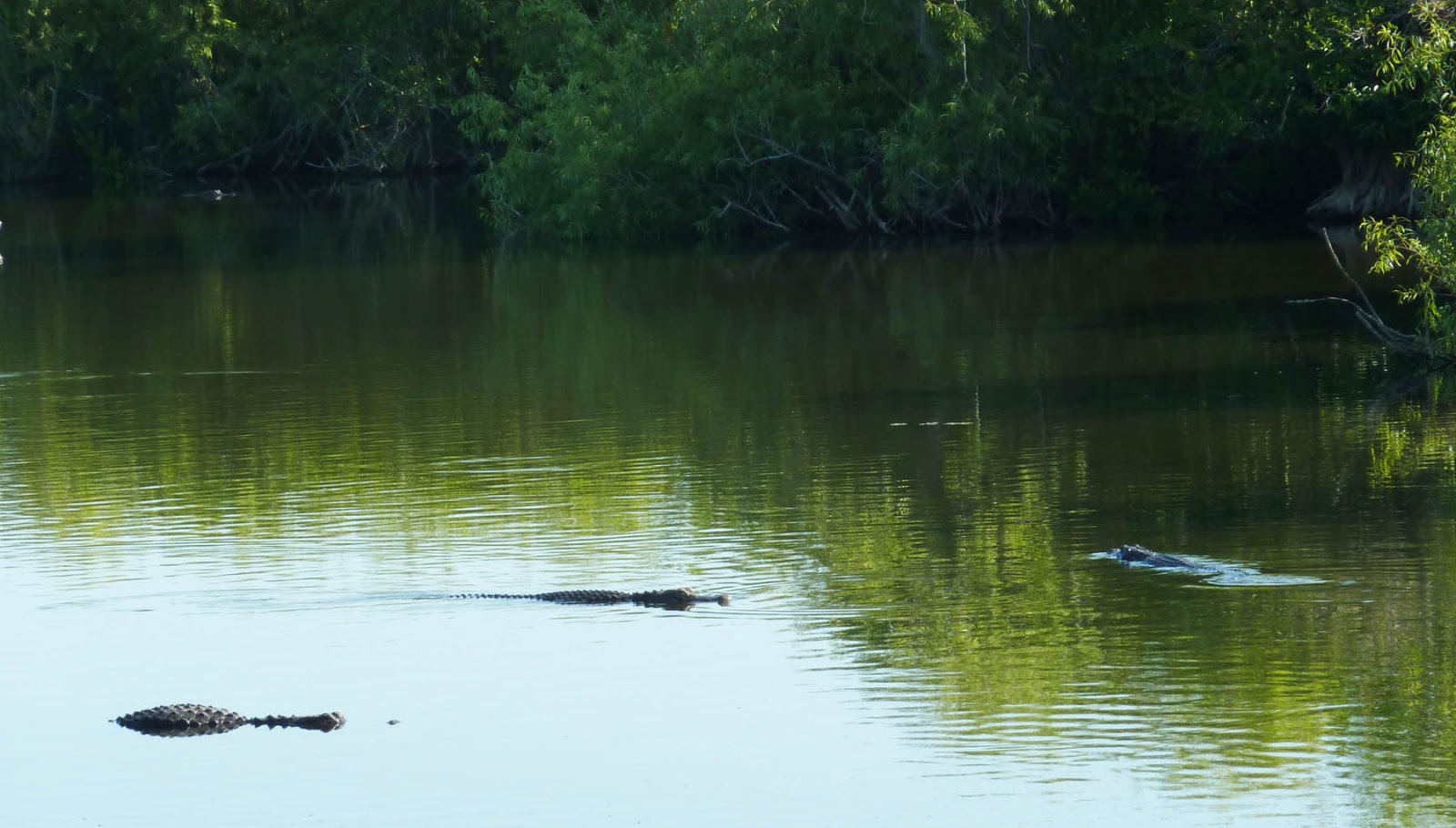
How many Gators can you count?

Anhinga taking a break on the
boardwalk


Air Plant Flower


We saw some usual suspects, including Little Blue Heron, Great Blue Heron, Palm Warbler, Common Yellowthroat, and Red Shouldered Hawks. And surprisingly, we saw quite a number of Purple Gallinule out and about. They are usually pretty shy, but we saw a few foraging along the waterline.


Little Blue
Heron waiting for a fish


Palm Warbler

Purple Gallinule


Purple Gallinule


Purple Gallinule


The next day, we decided that we would try to get up especially early to see if we could actually try to get a view one of the numerous Chuck-Will's-Widow that fly about. A man the day before advised that we could find them all along the wires on a side road. So we woke up as soon as we heard the first set of calls while it was still dark out and drove to this secluded road. We drove up and down looking for these birds, but we had no luck. We thought we might have seen some fly by, but no definite ID's. I couldn't hear as many as the day before, but we could definitely hear them closer. We parked and walked out into the road to search on foot for a little bit. But after realizing that we were in panther territory with nobody else awake and nearby to hear our possible screams for help, we went back in the car to search again. But alas, still no sightings.


Morning fog over the swamp


One Eyed Gator

We headed to Anhinga Trail again the next morning, and we got to see the morning fog hovering over the marsh in a ghostly manner as the sun was rising. And we had a nice little surprise by a pair of Norther Waterthrush calling to each other and foraging for food while bobbing their little tails. We also had some nice views of a pair of Red-Shouldered Hawks, what appeared to be one adult and one juvenile.


Great Blue Heron


Northern Waterthrush

Adult and Juvenile Red-Shouldered Hawks

Juvenile Red-Shouldered Hawk

Me with my camera in hand

Nick getting a head start on the trail